
 admin
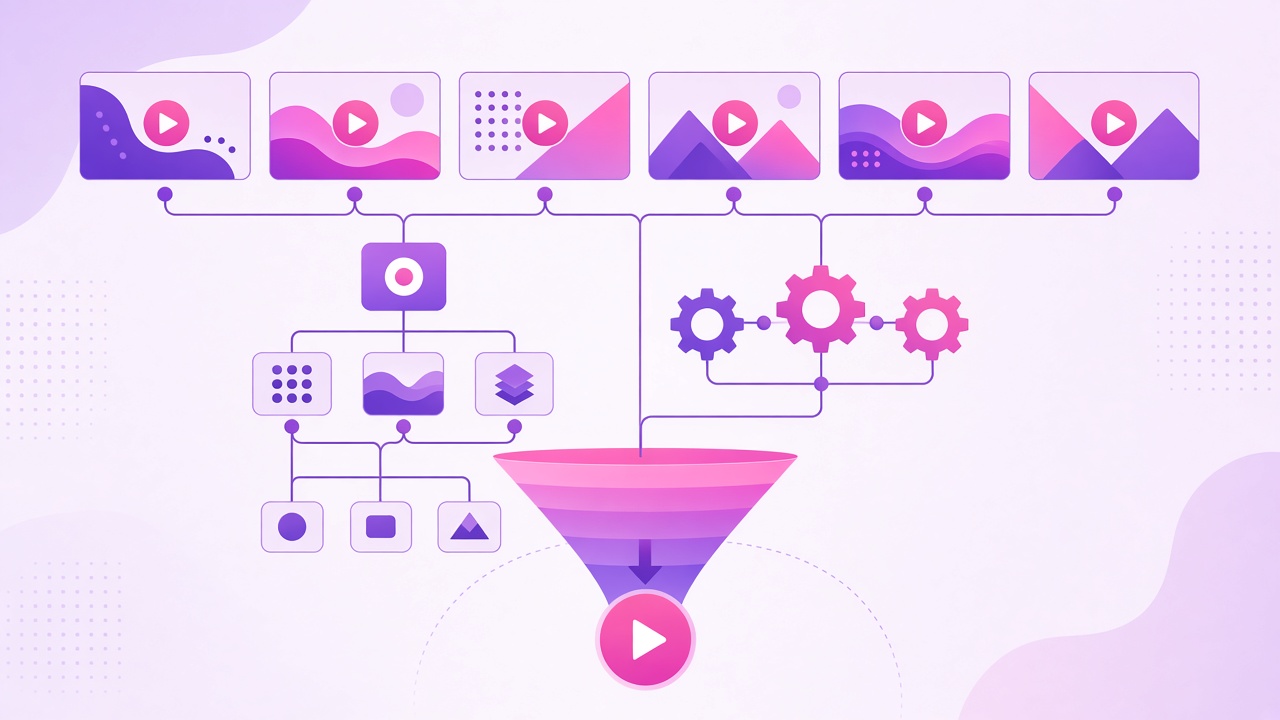
Most adult video platforms treat SEO as a collection of disconnected actions. Someone submits a few sitemaps, another person rewrites titles, a third blocks certain parameters in robots.txt, and traffic either stalls or fluctuates without clear cause.
The result is the same: pages that rank inconsistently, videos that never surface in search, and users who land on thin or duplicate results and leave. A system replaces that scatter with a repeatable process that improves both indexation and the path a visitor actually follows once they arrive.
Why it matters?
Search engines do not treat video sites the same way they treat text blogs. Crawl budget is finite, video files consume more resources, and duplicate or near-duplicate URLs multiply quickly when the same clip appears under multiple titles, categories, or tracking parameters. Without a coherent approach, large portions of a library remain invisible.
At the same time, the customer journey suffers. A user searching for a specific scene or performer may land on a page that loads slowly, contains the wrong embed, or forces them through extra clicks before they can watch. Better technical foundations reduce those friction points and make the site more useful for both bots and people.
Current-state diagnosis
Start by measuring what is actually happening. Pull the last 90 days of Google Search Console data and separate performance by page type: video detail pages, category/archive pages, performer pages, and any tag or search-result pages that are indexed. Look for three patterns.
First, compare the number of video URLs in the sitemap against the number of video pages that show impressions. A large gap usually signals indexation problems. Second, check the Coverage report for “Duplicate without user-selected canonical,” “Crawled – currently not indexed,” and “Discovered – currently not indexed.”
These statuses are common on tube sites that generate URLs dynamically. Third, sample a set of high-impression video pages and inspect the rendered HTML for multiple video objects, conflicting schema, or canonical tags that point to less useful versions of the page.
Also examine internal linking. Many platforms push almost all equity through category hubs while individual video pages receive only a single link from a related-videos module. That structure limits the ability of newer or longer-tail clips to gain traction. Note any URL patterns that create near-duplicates: session IDs, sort parameters, quality selectors, or mobile/desktop variants that are not properly canonicalized.
This diagnosis gives you a baseline. Without it, every later change is guesswork.
Step-by-step framework
Treat the work as a sequence rather than a list of optional tactics.
1. Clean the URL surface
Decide which parameters are allowed to create indexable pages and which must be blocked or canonicalized. Use robots.txt and the URL Parameters tool (or equivalent server-side rules) to prevent crawling of pure tracking or sort variants.
For every video, establish one preferred URL and ensure the canonical tag, Open Graph URL, and any schema VideoObject all reference it. Remove or 301 any legacy URL formats that still receive residual traffic.
2. Build a video-aware sitemap strategy
A single giant XML sitemap is rarely optimal. Split by content type and freshness. Maintain separate sitemaps for recent uploads, high-performing evergreen videos, performer pages, and category pages.
Include the video sitemap extensions (title, description, thumbnail, duration, publication date) so that Google can understand the media without having to render every page. Update the index file frequently and monitor the last-submitted and last-downloaded timestamps in Search Console. Stale sitemaps are a common reason new videos stay undiscovered.
3. Control indexation at the page level
Not every video deserves to be indexed. Thin or low-quality clips, near-duplicates of existing titles, and private or members-only content should carry noindex. Use a consistent rule set rather than case-by-case decisions.
For pages that should rank, make sure the primary content (the video player, unique title, and descriptive text) is present in the initial HTML response and not loaded exclusively via JavaScript after the fact. Lazy-loaded or client-side-only video markup frequently leads to incomplete indexing.
4. Strengthen internal signals
Link from category and performer pages to individual videos using descriptive anchor text that reflects the search intent. Avoid generic “watch now” links as the sole connection. Add a modest number of contextual links inside any related-content or “more from this performer” modules. Keep the depth shallow: a video should be reachable in three clicks or fewer from the homepage or main category hubs.
5. Align on-page elements with the actual content
Titles and descriptions should describe the specific video rather than recycle category-level language. Schema should accurately reflect the duration, upload date, and thumbnail. If the same clip is available in multiple qualities or with different watermarks, choose one primary version for indexing and treat the others as variants.
6. Monitor crawl and indexation continuously
Schedule regular checks of the Coverage and Sitemaps reports. Set alerts for sudden drops in indexed video pages. When a batch of new videos is uploaded, verify that the corresponding sitemap was fetched and that a sample of the new URLs appear in the index within a reasonable window.
These steps form a closed loop. Diagnosis informs the rules, the rules are applied consistently, and measurement shows whether the rules are working.
Common pitfalls
Several mistakes appear repeatedly on adult video sites.
- Submitting every possible URL variant in sitemaps. This wastes crawl budget and increases the chance of duplicate clustering.
- Relying solely on JavaScript frameworks for the video player and metadata. Search engines can render JS, but the process is slower and less reliable than server-rendered markup.
- Treating category pages as the primary ranking targets while neglecting individual video pages. Categories can rank for broader terms, but long-tail intent usually lives on the video detail page.
- Ignoring soft 404s and thin pages generated by empty search or filter combinations. These dilute overall site quality signals.
- Changing URL structures without proper redirects. Old links from external sites and internal bookmarks continue to send traffic (and equity) to dead ends.
- Over-optimizing titles with the same primary keyword across hundreds of pages. This creates near-duplicate title patterns that search engines often collapse.
Avoiding these is as important as implementing the positive steps.
Measurement and checklist
Use the following verification list after each major change cycle:
- Number of video URLs in active sitemaps versus number of video pages showing impressions in Search Console.
- Percentage of video pages marked “Indexed” versus “Discovered – currently not indexed.”
- Presence of correct VideoObject schema and matching canonical on a random sample of 20–50 pages.
- Crawl stats: average response time and any spike in soft 404 or redirect chains.
- Internal link distribution: average number of unique internal links pointing to video detail pages.
- Change in impressions and clicks for a controlled set of newly optimized videos versus a control set left unchanged.
- User-side signals where available: bounce rate or average watch time on pages that received technical improvements.
Track these metrics on a fixed cadence (weekly for active upload periods, monthly otherwise). The goal is steady improvement in the ratio of crawlable, indexable, useful pages rather than short-term ranking spikes for a handful of titles.
Next steps
Once the technical foundation is stable, the same system can be extended to performer and category pages, international language versions, and any membership or premium sections that should remain selectively indexed. The core principle remains the same: reduce unnecessary URL variation, surface the right pages to crawlers, and make the resulting search landing pages useful for the people who click through.
If you are working through a similar cleanup on a large video library and want to compare notes on sitemap partitioning, canonical rules, or indexation diagnostics, the practical details are worth discussing. Technical notes on porn tube SEO can serve as a reference point for the approach outlined here.