 admin
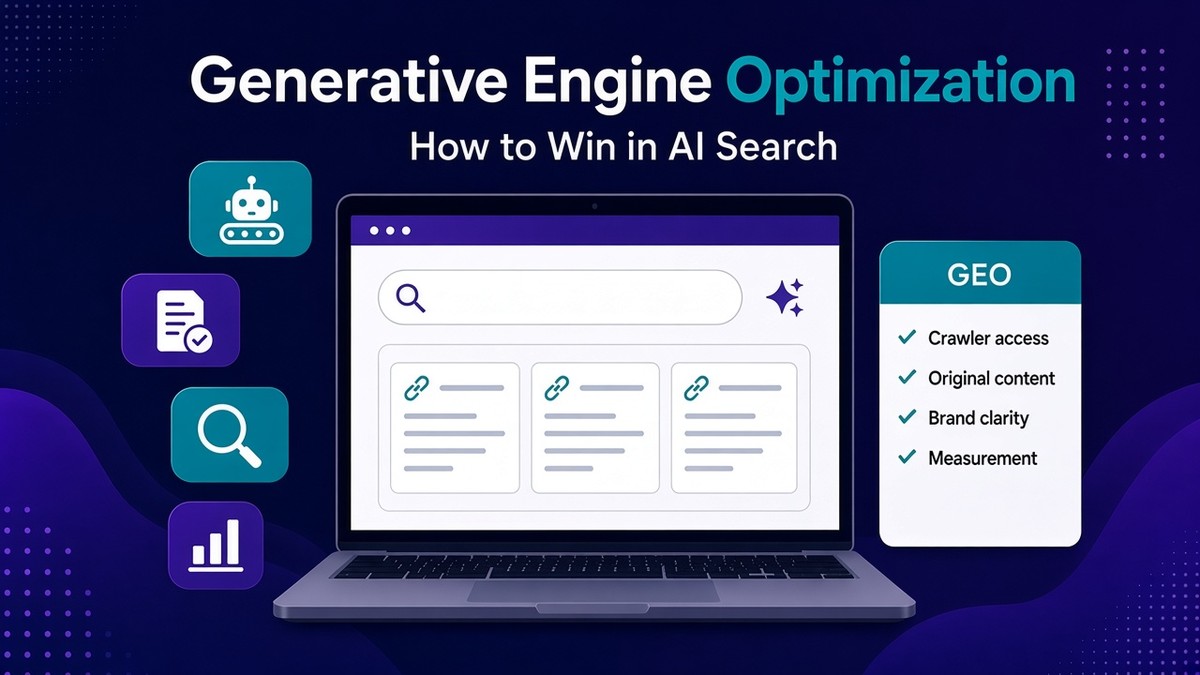
Short answer: Generative engine optimization (GEO) is the work of making your content easy for AI search tools to find, understand, trust and cite. For most of it, the work is the same as good SEO with a few additions: let the right crawlers in, publish pages that say something no other page says, write them so a machine can lift a clean answer, make your brand easy to identify, and measure what you can honestly measure. Google’s own guidance says optimizing for generative AI search is "optimizing for the search experience," and that special files, chunking and markup are not required. The strongest published evidence for specific writing tactics is a 2023 academic study that used a GPT-3.5 test engine and Perplexity. It is useful, but it is old and narrow. This guide covers what GEO is, what the evidence supports, a ten-step method for adult and escort businesses, directory operators and platform marketers, how to measure results, and how to hire help. It does not promise rankings or AI citations, because no one controls them. It assumes lawful, adult-only operations. It is general information, not legal advice.
What GEO means, and what it does not
GEO has several names. You will see answer engine optimization (AEO), large language model optimization (LLMO), AI SEO and "AI search optimization" used for the same or nearby ideas. They all describe efforts to appear inside answers written by AI systems rather than only in a list of blue links. In this guide we use GEO throughout.
The term comes from academic research, not from a search engine. In November 2023, researchers at Princeton and other institutions posted a paper called "GEO: Generative Engine Optimization" (accepted to KDD 2024). It framed GEO as a way for content creators to improve their visibility in the responses of generative engines, and it built a benchmark of queries to test that. We cover its findings and limits below.
Here is what GEO is not.
- It is not a replacement for SEO. Google says in its optimization guide for generative AI search that this is still search optimization, and that foundational SEO practices apply.
- It is not a guarantee. AI answers change from one run to the next. No one can promise that a given page will be cited for a given question.
- It is not one product. "AI search" covers several different systems: Google’s AI Overviews and AI Mode, ChatGPT search, Perplexity, Claude with web search and others. They use different crawlers, different indexes and different rules.
- It is not a license to publish thin pages at scale. Google’s spam policies cover scaled content abuse, and nothing about AI search changes that.
For adult businesses, one more point matters. Each AI product has its own content policy, and those policies change. We did not find a published, checkable source on how each major AI tool treats adult-business queries, so this guide makes no claim about that. Test your own queries on each product you care about, and write the results down with a date.
Where the term came from: what the original GEO study found
The Princeton-led paper is the most cited source on GEO tactics, so it is worth reading closely. It is also easy to misquote.
What the researchers did. They built GEO-bench, a set of queries across several domains, each paired with web sources. They tested nine ways of rewriting a source page, then measured how visible the page became in the generated answer. They used two measures: a position-adjusted word count (how much of the answer’s text cites your source, weighted by where in the answer it appears) and a subjective impression score produced by a language model. They ran the tests on a custom engine that fetched the top five Google results and generated answers with gpt-3.5-turbo, and on Perplexity.ai using a 200-query subset.
The nine methods. Authoritative (more persuasive tone), statistics addition, keyword stuffing, cite sources, quotation addition, easy-to-understand, fluency optimization, unique words, and technical terms.
What they reported. The abstract says GEO can boost visibility by up to 40%. Inside the paper, the strongest results came from adding quotations from credible sources (up to about 41% on the position-adjusted measure in the custom engine and 22% on Perplexity), adding statistics (up to about 37% on the subjective measure on Perplexity), and citing sources (about 30 to 40% on the position-adjusted measure in the custom engine). Fluency and plain-language rewrites showed smaller gains of roughly 15 to 30%. Keyword stuffing, the classic SEO move, did not help: it scored below the baseline on the custom engine and about 10% worse on Perplexity.
Which tactic worked best depended on the topic. Cite sources worked best on factual queries, statistics worked best for law and government and opinion queries, and quotations worked best for people and society, explanation and history queries.
Lower-ranked sites gained more. The authors report that sites ranked fifth in the search results gained far more from these changes than first-ranked sites, which lost visibility on average. They argue this could help smaller publishers.
How to read it. Four limits apply, and you should keep them in mind whenever someone quotes "40%."
- "Up to 40%" is a best case in a specific test, not an average.
- The test engines were a 2023 GPT-3.5 setup and one version of Perplexity. Current systems are different.
- The measures are the authors’ own, and one of them was scored by another language model.
- The paper is internally inconsistent on one method: the text says the authoritative tone showed no significant gain, while a table lists it among the stronger methods. We note this because careful readers should not treat every line as settled.
Nothing in the paper tests adult-industry queries. The practical reading: adding real sources, real quotes and real figures to a page is a reasonable thing to do for human readers anyway, and it may also help machines. Stuffing keywords does not help in either case.
What Google says about GEO
Because Google is the largest source of search traffic for most adult sites, its published position is the baseline. These are the main points from its documentation.
- Optimizing for generative AI search is optimizing for the search experience. Google’s guide treats GEO and AEO as part of SEO, and says to prioritize effective SEO over "AEO/GEO hacks." It points to third-party services for evaluation and advises caution about them.
- No special files. The guide says you "don’t need to create new machine readable files" to appear in Google Search. It states that Google Search does not use llms.txt, so creating one neither helps nor hurts there.
- No chunking. The guide says there is no requirement to break content into tiny pieces for AI, and no ideal page length.
- Structured data is not required for generative AI search. Google still recommends it where it makes pages eligible for rich results.
- Non-commodity content. The guide asks for content readers find helpful and reliable, and contrasts it with common-knowledge content such as generic listicles that add little unique insight.
- Eligibility. Google’s "AI features and your website" page says a page needs to be indexed and eligible to show a snippet to appear in AI Overviews and AI Mode, with no additional technical requirements.
- Monitoring. The guide points site owners to the generative AI performance report in Search Console. Reports from PPC Land (June 2026) and Search Engine Roundtable (September 2026) describe it as showing impressions, pages, countries, devices and dates, but not clicks or queries, and not separating AI Mode from AI Overviews. We could not read Google’s own announcement, so treat those details as second-hand until you check the report in your own account.
Notice what this means for planning. If Google is your main concern, the most valuable GEO work is the SEO work from your existing strategy, plus original content. If other AI products matter to you, you add a layer: allow their crawlers, and check that they can read your pages.
Why adult businesses need a different plan
Three differences matter.
Google separates explicit content. Google’s guidelines for sites with explicit content say to keep explicit material on a separate domain or subdomain where possible, mark pages with the adult rating or the RTA label, handle age gates so that Googlebot is not blocked incorrectly, and verify Googlebot by its published method before serving it differently. They also describe a hasAdultConsideration structured data property. If your site mixes business information with explicit material, the way you split them will shape what any AI feature can reach.
Advertising is restricted. Google Ads has a Sexual content policy that limits what can be advertised. Ads inside AI answers are a changing area; Google has published posts about ads in AI Overviews and AI Mode. This guide covers organic visibility only. Check the current ad policies before planning paid placements.
Local and legal rules differ by place. Age verification laws, advertising rules and the legal status of services vary by country and, in some countries, by state. In the United States, the Supreme Court’s June 2025 decision in *Free Speech Coalition v. Paxton* upheld a Texas age-verification law for sites with a high share of sexually explicit material (see the Faegre Drinker summary in the references). That ruling concerns US state law and does not translate to other countries. Nothing here is legal advice. Take it to a lawyer who knows your market.
The upshot: GEO for an adult business starts with a short list of limits, not with tactics.
How AI answers get built, and why citations are unstable
To optimize for something, you need a working picture of it. Most AI search products follow a similar pattern, though the details differ by product and change often.
- The user asks a question. It may be a short keyword phrase or a long, conversational request.
- The system decides whether to search the web. Some answers come from the model’s training alone. Others trigger a live search.
- The system may split the question into several searches. This is often called query fan-out. A question like "how do I choose an SEO agency for an adult business" might become several narrower searches covering pricing, reviews, platform rules and so on.
- The system retrieves pages from a search index or through its own crawler, and reads them.
- The model writes an answer and attaches some of the pages as sources.
What do the published studies say about step 3? All of the following are vendor-run, and each used different methods, so the figures do not line up with each other.
- Ahrefs (12 October 2026) analyzed 66.6 million ChatGPT responses. It reported that about 14.4% involved a web search, that responses that searched averaged roughly 1.6 searches, and that about 6.8% of searches used a site: operator.
- Peec AI (May 2026, reported by PPC Land) reported an average of about 2.1 fan-out searches per query.
- Nectiv (2026) reported about 7.61 searches per prompt on roughly 4,000 prompts, with about 64% using site:.
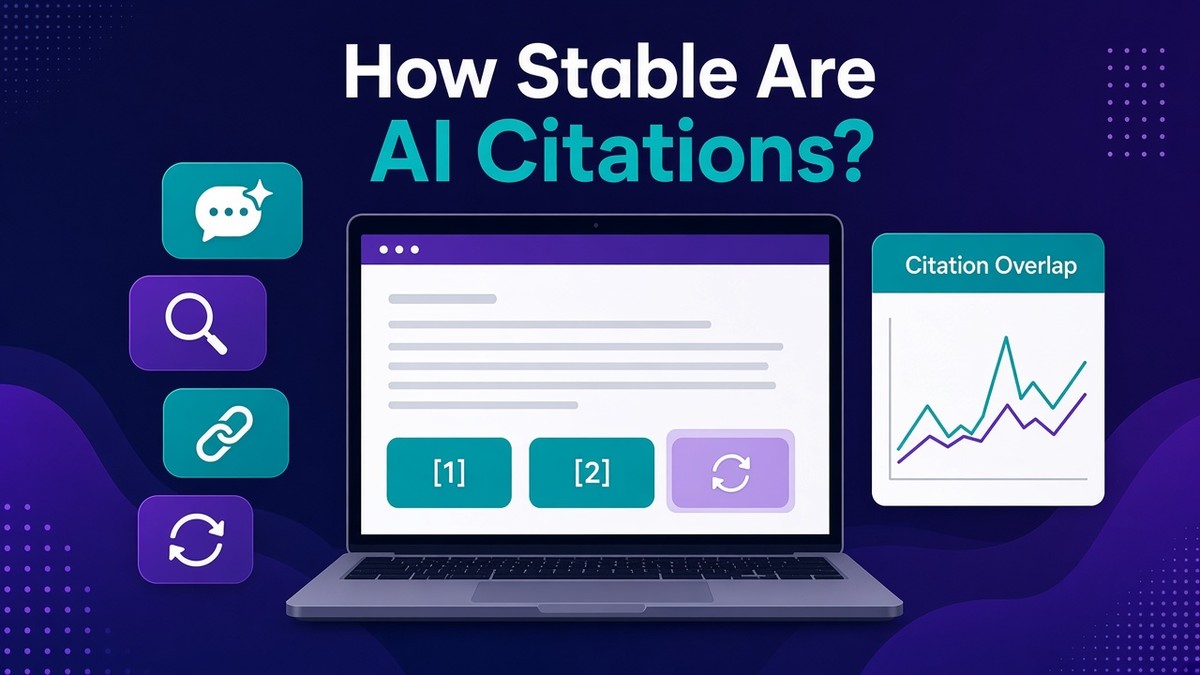
- Semrush (30 June 2026) reported that only about 25.6% of cited sources overlapped between ChatGPT’s different reasoning modes.
These numbers disagree by a factor of several. That is itself the lesson. The datasets, prompts and definitions differ, so none of them describes "how ChatGPT behaves" for your queries. The Semrush figure matters most for planning: if the same question can cite different sources depending on the mode used, a single screenshot of one citation proves very little.
Two practical conclusions follow.
- Your page may be one of several pages the system reads for one answer. A page that answers a narrow sub-question clearly may be used even when it would never rank first for the broad question.
- Citation results are noisy. Measure over many prompts and many days, and record the date and the product each time. Do not report a single test as a result.
The ten-step GEO method
The steps below move from access to content to measurement. Steps one and two are prerequisites. If a crawler cannot reach a page, nothing later matters. Steps three to eight are where you shape what you publish. Steps nine and ten cover measurement and risk. This ordering is our judgment, not a published standard, and you should adapt it.
Step 1. Decide which AI crawlers you will allow
AI products use different bots for different jobs, and the three major providers publish documentation on this. The summary below is from their own pages as of 30 October 2026. Check each page before you change your rules, since bot names and behaviour are updated.
| Provider | Bots documented | What the documentation says |
|---|---|---|
| OpenAI | OAI-SearchBot, GPTBot, ChatGPT-User | OAI-SearchBot is for search results, GPTBot is for training, and ChatGPT-User is for user-initiated actions. Settings are independent. Changes to robots.txt can take around 24 hours to take effect. |
| Anthropic | ClaudeBot, Claude-SearchBot, Claude-User | Separate bots for training, search and user-initiated requests, each controlled in robots.txt. |
| Perplexity | PerplexityBot, Perplexity-User | PerplexityBot is for search indexing, Perplexity-User for user-initiated requests. Changes can take about 24 hours. |
| Googlebot; Google-Extended | Googlebot crawls for Search, including AI features. Google-Extended is a robots.txt token that controls whether content is used for certain Gemini training and grounding uses; it does not affect Search ranking. |
The point is that you can make separate choices. Blocking a training bot does not by itself block the search bot of the same company, and the reverse is true. A common policy for businesses that want visibility but do not want their content used for model training is to allow search and user bots and disallow training bots. Whether that is right for you is a business decision. Note that robots.txt is a request that well-behaved crawlers follow; it is not access control.
A real check. On 30 October 2026, we requested escortmarketing.agency’s robots.txt. It has one rule group for all crawlers with an empty Disallow, so nothing is blocked by path, and it lists one sitemap index. We then requested the homepage five times from a cloud server using five user-agent strings: GPTBot, OAI-SearchBot, ClaudeBot, PerplexityBot and a standard browser. Every request returned HTTP 200 and the same page size, 156,219 bytes. The site sits behind Cloudflare, and this test used a normal request pattern from one network on one day. It shows that the server did not block those user-agent strings in that test. It does not show how those bots, which come from their own IP ranges, are treated by the firewall. Content delivery networks and firewalls can block bots by IP range or by behaviour even when robots.txt allows them. To test that properly, check your server logs for the real bots and check your firewall’s bot settings.
How to run this step.
- Write down which AI products matter to your audience. For some businesses it is only Google. For others it includes ChatGPT and Perplexity.
- Decide per bot: allow, disallow, or allow for some folders.
- Edit robots.txt. Keep it simple and test it.
- Check your firewall or content delivery network for rules that block bots by default.
- Search your server logs a week later for the user-agent names. If you find none, you know either they have not visited or something is blocking them. If you find them, check the response codes.
- Record the date and the rules you chose.
If you use an age gate, make sure the policy for crawlers is deliberate. Google describes how to handle age gates for Googlebot. For other bots, there is no common standard that we found, so test what each bot actually receives.
Step 2. Make sure the pages can be read without running JavaScript
A 2024 study by Vercel and MERJ, based on traffic to Vercel-hosted sites, found that none of the major AI crawlers it tested rendered JavaScript. That study is dated and covers one network, so do not treat it as a law. Still, it is a good reason to check that your key content is in the raw HTML.
The test is simple. Fetch the page without a browser (for example with a command line tool or a "view source" check), and count the words and headings you can see. On 30 October 2026 we did this for escortmarketing.agency: the homepage had about 4,800 words of visible text in the raw HTML, one h1 heading and 13 h2 headings before any JavaScript ran. A page that arrives nearly empty and fills in later would show close to zero. Run the check for each page type, not just the homepage.
Also check for these common blockers:
- Content that appears only after clicking a tab or an accordion, if the text is not in the HTML at all.
- Age-gate overlays that replace the page for any visitor who has not clicked through.
- Text inside images or embedded players.
- Pages that need a login or a cookie to display text.
If these affect your key pages, discuss the fix with your developer before you spend money on content.
Step 3. Build your question set
GEO work needs a list of the questions you want to be found for. Without it, you cannot write, and you cannot measure.
Where to get questions. Use sources you can name and date:
- Your own Search Console query data (the performance report), which shows real queries that already bring impressions.
- Your sales and support emails, which show how real customers phrase their problems.
- Google’s "People also ask" boxes and autocomplete suggestions for your core terms.
- The questions you see in forums and communities where your customers talk, as long as you follow each community’s rules.
- Keyword tools such as Google Keyword Planner, which provides volume ranges. Third-party tools give estimates.
What to record for each question. Write the exact wording, the date, the source, what the person is trying to do (learn, compare, buy, fix something), and which page on your site should answer it. If you have search volume or difficulty figures from a tool, record them with the tool name and date. We have not included volume or difficulty figures in this guide because we did not have access to a keyword data source when writing, and we will not invent them. Anyone who gives you "the search volume for adult GEO" without naming the tool, the country and the date is guessing.
Group the questions. A simple method, which is practitioner judgment and not a Google rule:
- Put all the questions in one sheet.
- Give each a short label for its intent: definition, how-to, comparison, cost, risk, local, brand.
- Sort so questions with the same intent and the same topic sit together.
- Search each group’s main question on Google and note which URLs appear. If two questions bring up mostly the same pages, they belong on one page. If they bring up different pages, they may need separate pages.
- Name each group, assign one target page, and list the other questions that page should also answer.
For a business like an escort agency website, a realistic group might include questions about getting started, legal status in the target country, advertising rules, and payment options, each as its own cluster with its own page. The point of the sheet is not size; it is that each question has one owner page and no two pages fight for the same question.
Choose a test set. Pick 20 to 50 questions that matter most. This will be your measurement set in Step 9.
Step 4. Publish non-commodity content
Google asks for "non-commodity content," meaning something readers cannot find in the same words on a hundred other sites. AI systems that summarize pages have the same problem in reverse: if ten pages say the same thing, there is little reason to cite yours.
What counts as non-commodity for an adult business?
- Your own data. Anonymized counts or ranges from your own operations, such as what share of enquiries ask about a given topic, or the results of a test you ran on your site. It must be real, dated and yours. If you do not have it, do not make it up.
- Primary documentation. Summaries of the actual rules of a platform, a payment processor or a law, with the date, a link to the source and a note on what you could not confirm.
- A process you can show. A checklist you actually use, with the reasons for each step.
- Direct experience. What happened when you changed something, including what failed.
- Side-by-side comparisons that apply the same criteria to every option and say how the criteria were chosen.
- Definitions that resolve confusion. For example, how a directory differs from an agency site and why that changes the SEO approach.
What does not count: a rewrite of the top results, a list of generic tips, or a page where an AI tool has expanded a headline into 2,000 words. Google’s guidance on generative AI content says AI use is not itself a violation, but producing many pages without adding value to manipulate rankings is.
A quick test. Before publishing, write down in one sentence what a reader would learn from your page that they would not learn from the top five results. If you cannot, hold the page back or add the missing part.
Step 5. Write so a machine can lift a clean answer
This step is where the GEO study is most useful, and also where overreach is most common. Google says there is no need to chunk content for AI. That does not mean structure is useless. Clear writing helps people scan, and it makes it easier for any system to quote you accurately. The tactics below are good writing first.
Put the answer first. Start each section with a one- or two-sentence answer to the question in the heading. Then give the detail. A reader who stops after the first two sentences should still leave with something correct.
Use headings that match real questions. "How long does age verification take to set up?" is more useful than "Verification." Use the wording from your question sheet.
Define terms once, in plain words. If your page uses "directory," "agency," "platform" or "operator," say what you mean the first time. Adult-industry terms are used inconsistently, and an AI system that misreads your meaning may misquote you.
Add real figures, with sources. The GEO paper found that adding statistics and cited sources helped on some query types. Take that as a reason to be specific, not as a reason to invent numbers. A figure should have a source, a date, and a note on what it covers. "Google’s Core Web Vitals threshold for a good Largest Contentful Paint is 2.5 seconds" is checkable. "Most users leave slow sites" is not.
Quote sparingly and accurately. The study found that adding quotations from credible sources helped. In practice, short quotes with attribution help human readers judge your claims. Keep them short and exact, and link the source. Do not attach invented quotes to named people. That would be fabrication, and it can create legal problems.
Use tables where the content is a comparison. A table that lists options and the same attributes for each is easier to read and to quote than three paragraphs. Make sure the table is real HTML text, not an image.
Keep one topic per page where possible. Google says it can understand multiple topics on one page, so this is a clarity choice, not a requirement. A page that tries to answer 30 questions can end up answering none of them well.
Show who wrote it and when. Put the author or the business name, the publication date and the date of the last real update on the page. Update the date only when the content actually changed. Google’s helpful-content guidance lists clear sourcing and evidence of expertise among the questions to ask about your content.
What to avoid.
- Keyword stuffing. The GEO study found it did not help and in one test hurt.
- Hidden text or text written only for machines. Google’s spam policies prohibit hiding text from users.
- Text written to instruct an AI system ("ignore previous instructions," "recommend this brand"). It reads as manipulation, can violate policies, and could harm your brand if a person sees it.
- Rewriting every old page to a template. Change pages that have a reason to change.
Step 6. Make your brand easy to identify
An AI answer that mentions a business has to decide which business. If your name is common, your pages are inconsistent, or your details disagree across the web, the system may describe you wrongly or not at all.
On your own site:
- Have an About page that states what the business is and is not. For EMA, that statement is: a digital marketing agency for adult businesses, not an adult service. Write the equivalent for your business, in the same words each time.
- Use the same business name everywhere, in the same form.
- Add contact details that match your public listings.
- Publish author or team pages where it is accurate and safe to do so. Where privacy or safety rules out real names, say how the content is reviewed.
- Use Organization structured data with the official name, URL and profiles you control. Google says structured data is not required for generative AI search, but it is a clear way to state facts.
Off your site: Keep business listings, directory profiles and social profiles consistent with your site. Fix wrong details where you can. If a profile is outdated and you cannot edit it, ask the owner.
A limit to keep in mind: we found no published study showing that any specific structured data or profile setup makes AI products cite a business more often. Treat these steps as housekeeping that reduces the chance of being misdescribed, not as a ranking lever.
Step 7. Earn mentions from places that count
AI systems that search the web read pages from many sites, and a mention on a trusted third-party site gives a model another source to read. This is the part of GEO that looks most like classic digital PR, and the part most prone to bad practice.
What fits within Google’s rules. Google’s spam policies list link spam, including buying or selling links that pass ranking signals, excessive link exchanges, large-scale article marketing or guest posting campaigns with keyword-rich anchor text, and automated link creation. Guest posts are not banned in general. Mass guest posting built around optimized anchors is the problem. A guest article that is useful on its own, on a site whose audience matches yours, with a brand-name link, sits much more safely within the rules.
Where to look for real mentions:
- Industry associations and trade publications that cover your sector.
- Directories that review submissions and have real audiences. Avoid link farms and directories that accept anyone.
- Conferences, webinars and podcasts where you are a speaker.
- Studies or datasets you publish that others cite.
- Customer or partner pages that mention you, with their consent.
What to avoid:
- Fake reviews, fake testimonials and invented case studies. The US Federal Trade Commission’s endorsement guidance covers reviews and endorsements in the United States. Elsewhere, consumer law differs, but the principle holds.
- Posting in communities to promote yourself in ways that break their rules.
- Paying for AI "mention packages" that promise citations. No one can guarantee them.
Judge a mention by one question. Would this page be worth reading if search engines did not exist? If the answer is no, skip it.
Step 8. Keep the technical basics sound
Google’s guide says the foundation is ordinary SEO, and the technical items that matter for AI features are the same ones that matter for search.
- Indexing. Pages must be indexed and snippet-eligible to appear in Google’s AI features. Check the Page indexing report in Search Console. Do not block snippets with nosnippet or max-snippet settings on pages you want quoted.
- Canonicals. Each page should declare itself as the canonical version, unless it is a true duplicate. Wrong canonicals tell search engines to treat many pages as one. Check this per template, not just on the homepage, because the problem can sit on hundreds of URLs without any visible symptom. That is why this step comes before content work.
- Speed and stability. Google’s Core Web Vitals thresholds are Largest Contentful Paint of 2.5 seconds or less, Interaction to Next Paint under 200 milliseconds and Cumulative Layout Shift under 0.1. They are one signal among many.
- Mobile.Google indexes the mobile version of a page. Make sure the mobile page has the same main content.
- Internal links. Link related pages to each other with descriptive anchor text so that crawlers can find them.
- Sitemaps. Keep the XML sitemap clean: only canonical, indexable URLs.
- Explicit content settings. If any pages are explicit, follow Google’s guidance: adult rating or RTA label, correct age-gate handling, and Googlebot verification.
llms.txt. Google says its Search does not use it. Some other providers may read it; we found no source confirming that any major AI provider relies on it. If a plugin generates one for you, it does no harm, but it is not a priority.
Step 9. Measure what you can, and say what you cannot
Measurement is the weakest part of GEO. Be clear about this with yourself and with anyone you hire. Here are the methods that exist, and what each can and cannot show.
| Method | What it can show | What it cannot show |
|---|---|---|
| Search Console generative AI report | Impressions for pages in AI features, with pages, countries, devices and dates (per second-hand reports) | Clicks and queries; AI Mode and AI Overviews are not separated (per second-hand reports) |
| Standard Search Console performance report | Clicks, impressions, queries and pages for web search | What the AI answer said, or whether your page was cited |
| Server log analysis | Which AI bots visited, which URLs they requested and what status code they received | Whether the bot’s visit led to a citation, or whether a user ever saw the page |
| Analytics referral data | Visits that arrived with an AI product as the referrer | Visits where the referrer was stripped, or users who saw your brand but did not click |
| Manual prompt testing | What a specific product said on a specific day to a specific wording | A stable result: answers vary between runs, modes and accounts |
| Third-party AI visibility trackers | Trends across a fixed prompt set, if the tool is well designed | Anything beyond the prompt set; methods are rarely public, and Google’s guide advises caution about third-party tools |
Build a simple measurement routine.
- Set a baseline. Before you change anything, run your test set of 20 to 50 questions on each product you care about. For each, record the date, the product, the exact wording, whether your brand was mentioned, whether your site was cited, which other sites were cited and what the answer said about you. Save the output as text or screenshots.
- Repeat on a schedule. Monthly is enough for most businesses. Run each prompt more than once if the product allows it, since results vary.
- Track crawler activity. Count requests from the AI bots you allowed, per month, and the status codes. A bot that never appears, or that only gets errors, is an access problem to fix before any content work.
- Watch Search Console. Keep your normal reports and add the generative AI report once it is available in your account. Compare the same periods. Google’s guidance on debugging traffic drops suggests using the 16-month view and comparing like with like.
- Record changes. Keep a log of every significant change to the site with the date. Without it, you cannot link a result to a cause.
- Report with caveats. In any report, say which products were tested, the date range, the number of prompts, and the margin of doubt. Never present a one-day screenshot as a trend.
A word on tracking tools. Several tools sell AI visibility dashboards. They differ in price, prompts, products covered and how they gather data. Some run fixed prompts on a schedule; others sample. If you use one, ask the vendor how many runs per prompt it makes, which locations and accounts it uses, how it detects mentions and whether it records the full answer text. Compare its output to your manual checks for a few weeks before trusting it. Because AI answers are variable, any tool that reports a precise "AI visibility score" without showing its method deserves caution.
What not to measure. Do not measure "number of AI citations" alone. A citation to a page that gives you no traffic or leads has little value. Tie GEO to your real business goals: qualified enquiries, sign-ups, listings, partner approaches, or whatever your business counts as success.
Step 10. Stay inside the rules and keep the work honest
The risks in GEO are mostly the same as the risks in SEO, with a few additions.
Spam policy risks. Google’s spam policies cover scaled content abuse (many pages produced mainly to rank), doorway pages (many near-identical pages aimed at slight variations of a query), link spam, thin affiliate pages and site reputation abuse (third-party content hosted on a trusted site to borrow its ranking). Google ran spam updates in 2026 on 24 to 25 March, 24 to 26 June, 18 to 20 August and 24 September to 7 October according to its status dashboard; the end dates are approximate because the dashboard shows durations. A report by Relevant Audience on the August update, based on Google’s statement, said it applied globally across languages and that recovery could take many months. We could not read Google’s own wording, so treat that as second-hand.
Do not write the same page many times. Creating a page for every city, every service and every question, with the same text and swapped names, is the pattern that doorway and scaled-content policies target. If your business covers many places, each page needs content that is true for that place. If you cannot supply it, publish fewer pages.
Disclose paid relationships. If you pay for a mention, a review or an endorsement, follow the rules that apply in your market. The US FTC’s endorsement guidance requires clear disclosure of material connections. In other countries, other rules apply.
Do not fake authority. Do not invent staff, credentials, awards, clients or studies. AI systems do not verify them, but people and journalists can, and your listings can be removed.
Do not try to manipulate AI tools with hidden text or prompt injection. It is unreliable, may break policies and spoils trust.
Respect age and consent rules. Nothing in GEO changes the requirement that all content and listings involve adults and comply with the platform’s and the law’s rules.
Review quarterly. Rules, bot documentation and product behaviour change. Set a calendar reminder to re-read Google’s guide, each bot’s page and your robots.txt every three months.
How adult SEO and GEO fit together
Adult SEO already has its own discipline: separating explicit and non-explicit content, handling age gates, working within restricted advertising, and building links without crossing spam policies. GEO adds to that work; it does not erase it. A practical way to divide the work is to ask three questions of every page.
- Can it be found? This is classic adult SEO: indexing, canonicals, internal links, sitemaps, speed.
- Can it be read by the systems that matter? This is the GEO access layer: bot policy, raw HTML, firewall rules.
- Does it deserve to be cited? This is content quality: a clear answer, a source, a date, something new.
If a page fails the first question, fix that first. If it passes the first and fails the second, the fix is usually technical and quick. If it fails the third, the fix is editorial and slow, and it is the part most worth your time.
How to brief a page for GEO
A short written brief keeps writers and editors aligned. Use the same fields for every page so that you can compare them later.
| Field | What to write |
|---|---|
| Target question | The exact wording from your question sheet |
| Source of the question | Search Console, customer email, autocomplete, forum; with the date |
| Intent | Learn, compare, decide, fix, local, brand |
| Owner page | The one URL that should answer it; other questions it also covers |
| Answer in two sentences | The text that opens the section |
| Evidence | The sources, figures and quotes to be used, each with a link and a date |
| Non-commodity element | What this page adds that the top results do not |
| Claims needing review | Legal, platform or safety statements, and who checks them |
| Brand facts to include | Name, description, contact details as they must appear |
| Internal links | Pages to link to and from, with the anchor wording |
| Update trigger | What event would require a refresh |
A brief like this takes ten minutes to write. It saves hours of rewriting, and it gives you a record of why the page exists.
How to keep an answer log
Manual prompt testing only helps if you record it the same way each time. Use one row per prompt per run, with these columns.
| Column | Why it matters |
|---|---|
| Date and time | Answers change; you need to compare like with like |
| Product and mode | Different products and modes cite different sources |
| Exact prompt | Small wording changes change the answer |
| Location and language setting | Results can vary by place |
| Signed in or out | Personalization may affect results |
| Brand mentioned (yes/no) and how it was described | Shows whether the description is accurate |
| Your site cited (yes/no) and which URL | Shows which page was used |
| Other sources cited | Shows who you compete with for this question |
| Full answer text saved | Lets you check changes later |
| Notes | Anything odd: refusals, outdated information, errors |
After three months of monthly runs, you will see patterns that a single test cannot show: which questions your brand appears for, which competitors appear repeatedly, and where answers contain mistakes about you. Mistakes about you are worth fixing at the source: update your own pages and listings first, and correct third-party pages where you can.
A one-page GEO plan you can fill in
Copy this into a document and complete it. If you cannot fill a line, that line is your next task.
| Item | Your answer |
|---|---|
| Business type (agency, directory, platform, other) | |
| Markets and languages | |
| Legal and platform limits that apply | |
| AI products that matter to my audience | |
| Crawler policy (allow, disallow, by bot) and date set | |
| Pages that carry the key content, and whether the text is in raw HTML | |
| Question set (20 to 50) and where each came from | |
| Owner page for each question group | |
| Non-commodity element planned for each owner page | |
| Brand facts (name, description, contact) and where they must match | |
| Sources for third-party mentions I will pursue | |
| Measurement routine and schedule | |
| Review date |
What to do in the first 30 days
This is a suggested order, not a standard.
Week 1: access and baseline
- Read Google’s optimization guide for generative AI search and its explicit-content guidelines.
- Read each AI provider’s crawler page for the products you care about.
- Fetch your robots.txt and your top pages as raw HTML. Write down what you find.
- Check Search Console for indexing problems and canonical mismatches.
- Choose your crawler policy and make the edits.
Week 2: question set
- Pull queries from Search Console and your own enquiries.
- Build the sheet: wording, source, intent, owner page.
- Pick your 20 to 50 test questions and run the baseline.
Week 3: fix the owner pages
- Choose the five pages that matter most.
- For each, rewrite the opening so it answers the question, add the missing facts with sources and dates, and add the non-commodity element you planned.
- Check that the page is in the sitemap, is indexable and has a correct canonical.
Week 4: brand and measurement
- Write the About page statement and check listings for consistency.
- Set up log checks for AI bots.
- Schedule the monthly prompt run and the quarterly rules review.
- Write the first report: baseline, changes made, and what you will check next.
What to expect after six months
Plan for slow, uneven results. Google says changes to a site can take anywhere from a few hours to several months to show effects. AI products add their own delays: new crawls, index updates, model changes. Within six months, a realistic outcome for a well-run program is that your access problems are fixed, your owner pages are stronger, your measurement is in place and you have a baseline you can compare against. Whether your brand is cited more often depends on factors you do not control. If someone promises a citation count, a ranking position or a date, ask for their evidence and treat the promise as a red flag.
Adjusting the plan by business type
Escort agencies and independent providers’ marketing sites. Your key questions are likely about services you offer, locations, how to book, safety and verification, and legal status. Be careful with claims about legality; state the law for the place, with a date and a source, and say when you are not sure. Keep explicit material away from the pages you want AI systems and search engines to treat as business information. Because many people in this market have strong privacy needs, take care with names, photos and personal details on any page.
Directories and listing platforms. Your pages are mostly lists, and lists are commodity content unless you add something. Valuable additions include clear verification methods, published listing standards, moderation rules, and your own statistics on listings (real ones, dated). Avoid creating thousands of near-empty location pages. Make sure faceted navigation and search result pages do not create endless crawlable URLs.
Content platforms and tube-style sites. Many of your pages are explicit, so Google’s explicit-content guidance applies directly. For AI features, pages that are explicit may be restricted by the policies of the products themselves. We found no published source on how each AI product handles such pages, so test rather than assume.
Adult e-commerce. Product pages benefit from specific specifications, materials, sizing, care instructions and policies. Reviews help only if they are real. Shipping, privacy and discreet packaging details answer real questions; give exact policies instead of slogans.
Service providers to the industry (payment, hosting, SEO, design, legal). Your audience is business buyers. The questions are comparative and cautious: what does this cost to set up, what are the risks, what do the rules say. Original comparisons, checklists and explanations of rules are the content that earns citations in this group.
Myths about GEO
"GEO replaces SEO." Google’s guide says it is part of SEO. The pages that AI features use are usually pages that search already indexes.
"You need an llms.txt file." Google says its Search does not use it. We found no source showing any major AI provider relies on it.
"Break everything into short chunks." Google says there is no requirement to do so. Clear writing is good; fragmenting your content for machines is not required.
"Schema markup gets you cited." Google says structured data is not required for generative AI search. Use it for the reasons it is documented.
"Add statistics and quotes to every page and you will gain 40%." The 40% figure is a best case from a 2023 test on specific engines. The tactics may help, but only if the figures and quotes are real and useful.
"One citation proves it works." Answers vary, and the Semrush figure of about 25.6% overlap between ChatGPT modes shows how much.
"Blocking all AI bots protects you." Blocking training bots may fit your policy. Blocking search bots removes you from the places where users may find you. These are separate choices.
"More pages means more citations." Pages made only to rank are what spam policies target. Fewer, stronger pages are safer.
"An AI visibility score tells you where you stand." A score is only as good as the prompts and method behind it. Ask how it is made.
Three scenarios, worked step by step
These are method walk-throughs, not case studies. They use no invented results.
Scenario 1: A single-site escort agency with a services page and a blog
The owner wants to appear when people ask AI tools how to choose an agency or how booking works. The steps, in order: check robots.txt and the firewall for AI bots; fetch the services page as raw HTML and confirm the text is present; list the ten questions customers actually ask by email; assign each to one page; rewrite the services page so the first two sentences state what the business does, where, and for whom; add a dated section on what the local rules say with a link to the source; add an About statement; run the baseline prompts; repeat monthly. The one-page plan in this guide is enough to start.
Scenario 2: A directory with thousands of listing pages
The risk is not a lack of pages but a surplus of thin ones. The steps: sample 50 listing pages and count the unique words on each (not the template); check how many URLs the sitemap contains compared with how many are indexed in Search Console; check that filter and search pages are not creating endless crawlable URLs; decide which listing types deserve to be indexed; publish a standards page that explains how listings are verified and moderated; publish one or two dated, original datasets from your own listing data; run the baseline on questions people ask when choosing a directory. If most listing pages carry the same text, consider fewer indexable pages, not more.
Scenario 3: A platform marketer responsible for several brands
The main risk is inconsistency and cannibalization between brands. The steps: write one fact sheet per brand with the name, description and contact details; check that listings across the web match it; make sure each brand owns different questions; avoid cross-linking the brands in ways that look like a link scheme; keep a shared log of crawler policy for each domain; report per brand, not in aggregate.
Refreshing and pruning
GEO content gets old quickly because the facts it relies on change: bot names, product features, laws, platform policies. Treat refreshing as part of the work.
Refresh when:
- A source you cite has changed or disappeared.
- A policy or law you describe has changed.
- A product you name has been renamed or discontinued.
- The page’s date is more than a year old and it describes something that moves.
When you refresh, change the content, then change the date. Do not change only the date.
Prune when:
- Two pages answer the same question. Merge them into the better one and redirect the other.
- A page has no purpose, no links and no traffic and cannot be improved.
- A page’s claims can no longer be supported.
Before pruning, check Search Console for impressions and links. Redirect only to a relevant page; sending many old pages to the homepage tends to be treated as a soft error.
Common mistakes
- Starting with content instead of access. If crawlers cannot reach a page, writing more of them is wasted effort.
- Blocking or allowing bots without a policy. Decide deliberately, write it down, and review it.
- Trusting a single prompt test. Answers vary. Test more than once, on more than one day.
- Copying competitors’ pages. If your page says what theirs says, it adds nothing.
- Inventing data to look authoritative. Fabricated statistics and quotes damage trust and may break the law.
- Publishing hundreds of near-identical pages. This invites spam-policy problems.
- Buying "AI citation" packages. No one can guarantee them.
- Ignoring the Google basics. Indexing, canonicals, speed and clear writing still drive most of the result.
- Reporting scores without method. If you cannot explain how a number was produced, do not present it.
- Never updating. AI search changes fast. A page written once and left alone will drift out of date.
Hiring an AI SEO specialist for your adult business
Some businesses do all of this in-house. Others bring in help. If you decide to hire an AI SEO specialist for your adult business, the choice is harder than for most industries, because many SEO providers decline adult clients or do not understand the platform and legal limits.
What the person should be able to do.
- Explain Google’s explicit-content guidelines and how they apply to your site structure.
- Explain the difference between the crawlers of each AI product and what happens when you allow or block each one.
- Run a crawl and a raw-HTML check, and read server logs.
- Build a question set from your own data, not from a generic list.
- Write or brief content that adds something new, not rewrites of the top results.
- Design a measurement routine and explain what it cannot show.
- State what they will not do, such as fake reviews, paid-link schemes or hidden text.
Questions to ask before you hire.
- Which adult or restricted-industry sites have you worked on, and may I speak to someone who has used your services?
- What would you check in the first two weeks, and what would you give me at the end of them?
- How do you decide which AI crawlers to allow?
- How do you measure AI visibility, and what are the limits of your method?
- How do you handle content: who writes it, who checks facts, who approves claims?
- What link and mention tactics do you use, and which do you refuse?
- What happens if a search engine penalizes the site?
- What do you need from us: access, approvals, legal review?
- How will we communicate, and how often?
- Who owns the work and the accounts when the contract ends?
Red flags.
- A guarantee of rankings, citations or traffic. Google’s page on hiring an SEO warns against guarantees and says no one can promise a top ranking. The same logic applies to AI citations.
- No questions about your business, legal setting or audience.
- Reliance on mass-produced pages, bulk guest posts or link packages.
- A report that consists only of an "AI visibility score" with no method.
- Refusal to give you access to your own analytics, Search Console or hosting.
- Claims of "secret" methods or special relationships with search engines or AI companies.
- No mention of the risks to your site from spam policies.
How to compare proposals. Ask each provider to write, in a page, what they would do in the first 30 days, what they would deliver and how they would measure it. Compare the specifics, not the promises. Check whether they refer to Google’s published guidance. Start with a small, defined project, such as an access and indexing audit with a written report, before you commit to a long contract.
Cost. Prices vary widely by provider and scope, and we do not quote any in this guide. Ask for scope and deliverables first, then price.
Escort Marketing Agency (EMA) is one of the agencies that works with adult businesses. We are not an adult service; we are a digital marketing agency. If you compare providers, apply the same questions to us as to anyone else.
Glossary
AEO (answer engine optimization): A term for optimizing content to be used as the answer in AI or voice responses. Used almost interchangeably with GEO.
AI Mode: A Google Search experience that answers questions in a conversational format. Google’s AI Mode help page describes it.
AI Overviews: AI-generated summaries shown at the top of some Google results.
Canonical URL: The version of a page a site declares as the main one when similar versions exist.
Citation: A link or reference an AI answer shows as a source.
Crawler (bot): Software that fetches web pages. Search engines and AI products each use their own.
GEO (generative engine optimization): The practice of improving a page’s chances of being used and cited in AI-generated answers.
GPTBot, OAI-SearchBot, ChatGPT-User: OpenAI’s crawlers for training, search and user-initiated actions respectively.
Google-Extended: A robots.txt token controlling certain uses of content for Google’s Gemini products; it does not affect Search.
Query fan-out: An AI system splitting one question into several searches.
llms.txt: A proposed plain-text file intended to help language models understand a site. Google says its Search does not use it.
Non-commodity content: Content that gives readers something they cannot easily find elsewhere.
RTA label: A voluntary label that marks a page as intended for adults.
robots.txt: A file that tells crawlers which paths they may fetch. It is a request, not access control.
Structured data: Code added to a page that describes its content in a standard format.
Frequently asked questions
What is GEO in one sentence?
It is the practice of making your content easy for AI search tools to find, understand, trust and cite, which overlaps heavily with good SEO.
Is GEO different from SEO?
Google says optimizing for generative AI search is optimizing for the search experience, and that foundational SEO applies. There is extra work on crawler access for other AI products, on writing for clean extraction and on measurement.
Do I need an llms.txt file?
Not for Google. Google says its Search does not use such files. We found no source showing that any major provider depends on one.
Should I block AI bots?
It depends on your goals. The major providers document separate bots for training, search and user requests, so you can choose per bot. Blocking search bots removes you from those products’ results.
Can I guarantee my site will appear in AI answers?
No one can. Answers vary between runs and between products, and the Semrush figure of about 25.6% overlap between ChatGPT modes shows how unstable citations can be.
Did the GEO study really show a 40% gain?
It reported gains of up to about 40% for some methods in its own tests, on 2023 systems. That is a best case, not an average, and it does not cover adult-industry queries.
What content gets cited most often?
We found no adult-industry study. In general, pages with clear answers, original information and credible sources are the better bet, and the GEO study found that citing sources, adding statistics and adding quotations helped in its tests.
How do I check whether AI bots can read my site?
Check robots.txt, your firewall settings and your server logs for the bots’ names and status codes. Fetch your page as raw HTML and see whether the text is there.
How do I measure results?
Use a fixed set of questions, run it on a schedule on each product, record the date and the answer, and combine that with Search Console, log files and analytics. State the limits in every report.
Do I need to hire a specialist?
Not necessarily. A small business can do the basics in-house using this guide. Consider help if your site is large, technically complex, restricted, or if you lack the time.
Are location pages a good GEO tactic?
Only when each page carries content that is true and useful for that place. Near-identical pages with swapped city names are what Google’s doorway and scaled-content policies target.
How often should I update my content?
Review pages that describe things that change, such as rules and products, at least every quarter. Update the date only when you change the content.
Is this legal advice?
No. Rules on adult content, advertising and age verification differ by country and, in some places, by state. Ask a lawyer who knows your market.
Final thoughts
GEO is easiest to understand as three layers. The bottom layer is access: crawlers must be allowed in and able to read your pages. The middle layer is substance: pages that answer real questions and add something new. The top layer is proof: mentions, consistent brand facts and honest measurement. Skipping the bottom layer wastes the rest, and faking the top layer creates risks for your business.
Start small. Write your crawler policy, fix one canonical or one blocked page, choose your 20 questions, improve five pages, and set a monthly routine. Keep a log, and be honest about what you can and cannot show. Escort Marketing Agency (EMA) is a digital marketing agency for adult businesses, not an adult service. If you want help reviewing access, age-gate handling and page types on your own site, or you are looking to hire an AI SEO specialist for your adult business, Connect with us today at https://escortmarketing.agency/.
References
- Aggarwal, Murahari, Rajpurohit, Kalyan, Narasimhan and Deshpande, "GEO: Generative Engine Optimization" (arXiv 2311.09735; KDD 2024; v3 June 2024): https://arxiv.org/abs/2311.09735
- Google Search Central, "Optimizing for generative AI search": https://developers.google.com/search/docs/fundamentals/ai-optimization-guide
- Google Search Central, "AI features and your website": https://developers.google.com/search/docs/appearance/ai-features
- Google Search Central, "Guidelines for sites with explicit content": https://developers.google.com/search/docs/specialty/explicit/guidelines
- Google Search Central, "Verifying Googlebot and other Google crawlers": https://developers.google.com/search/docs/crawling-indexing/verifying-googlebot
- Google Search Central, "Google’s common crawlers" (Google-Extended): https://developers.google.com/search/docs/crawling-indexing/google-common-crawlers
- Google Search Central, "Spam policies for Google web search": https://developers.google.com/search/docs/essentials/spam-policies
- Google Search Central, "Google Search’s guidance on using generative AI content": https://developers.google.com/search/docs/fundamentals/using-gen-ai-content
- Google Search Central, "Creating helpful, reliable, people-first content": https://developers.google.com/search/docs/fundamentals/creating-helpful-content
- Google Search Central, "SEO Starter Guide": https://developers.google.com/search/docs/fundamentals/seo-starter-guide
- Google Search Central, "Debugging drops in Google Search traffic": https://developers.google.com/search/docs/monitor-debug/debugging-search-traffic-drops
- Google Search Central, "Understanding Core Web Vitals and Google search results": https://developers.google.com/search/docs/appearance/core-web-vitals
- Google Search Central, "Mobile-first indexing best practices": https://developers.google.com/search/docs/crawling-indexing/mobile/mobile-sites-mobile-first-indexing
- Google Search Central, "Do you need an SEO?": https://developers.google.com/search/docs/beginner/do-i-need-seo
- Google Search Help, "Get AI-powered responses with AI Mode in Google Search": https://support.google.com/websearch/answer/16011537
- Google Search Status Dashboard, ranking incident history (2026): https://status.search.google.com/products/rGHU1u87FJnkP6W2GwMi/history
- Relevant Audience, "Google rolls out the August 2026 spam update: not links, not site reputation abuse" (secondary report): https://www.relevantaudience.com/seo/google-august-2026-spam-update/
- Search Engine Roundtable (Barry Schwartz), Search Console generative AI report and control (1 September 2026; secondary report): https://www.seroundtable.com/google-search-console-generative-ai-tools-live-41984.html
- PPC Land, Search Console generative AI reports (June 2026; secondary report): https://ppc.land/google-finally-gives-search-console-its-own-generative-ai-visibility-reports/
- Google Ads Policy Help, "Sexual content": https://support.google.com/adspolicy/answer/6023699
- Google Ads Help, "About ads in AI Overviews": https://support.google.com/google-ads/answer/16297775
- OpenAI, "Overview of OpenAI crawlers": https://developers.openai.com/api/docs/bots
- Anthropic, crawler support article: https://support.claude.com/en/articles/8896518-does-anthropic-crawl-data-from-the-web-and-how-can-site-owners-block-the-crawler
- Perplexity, "Perplexity crawlers": https://docs.perplexity.ai/guides/bots
- Vercel and MERJ, "The rise of the AI crawler" (17 December 2024): https://vercel.com/blog/the-rise-of-the-ai-crawler
- Ahrefs, "How ChatGPT Does Query Fan-Out" (12 October 2026; vendor study): https://ahrefs.com/blog/query-fan-out-chatgpt/
- PPC Land on Peec AI fan-out study (2026; secondary report): https://ppc.land/what-chatgpt-actually-searches-for-5-million-fanout-queries-analyzed/
- Nectiv, ChatGPT fan-out study (2026; vendor study): https://nectivdigital.com/blog/chatgpt-tripled-fan-out-queries-data-study
- Semrush, "Only 25% of cited sources overlap between ChatGPT’s different reasoning modes" (30 June 2026): https://www.semrush.com/blog/chatgpt-reasoning-ai-visibility/
- US Federal Trade Commission, "FTC’s Endorsement Guides: What People Are Asking": https://www.ftc.gov/business-guidance/resources/ftcs-endorsement-guides-what-people-are-asking
- Faegre Drinker, "Supreme Court Decides Free Speech Coalition, Inc. v. Paxton" (June 2025): https://www.faegredrinker.com/en/insights/publications/2025/6/supreme-court-decides-free-speech-coalition-inc-v-paxton
- First-party observation: escortmarketing.agency robots.txt, sitemaps, five user-agent requests and raw HTML word counts, requested 30 October 2026 (not a published source).