 admin
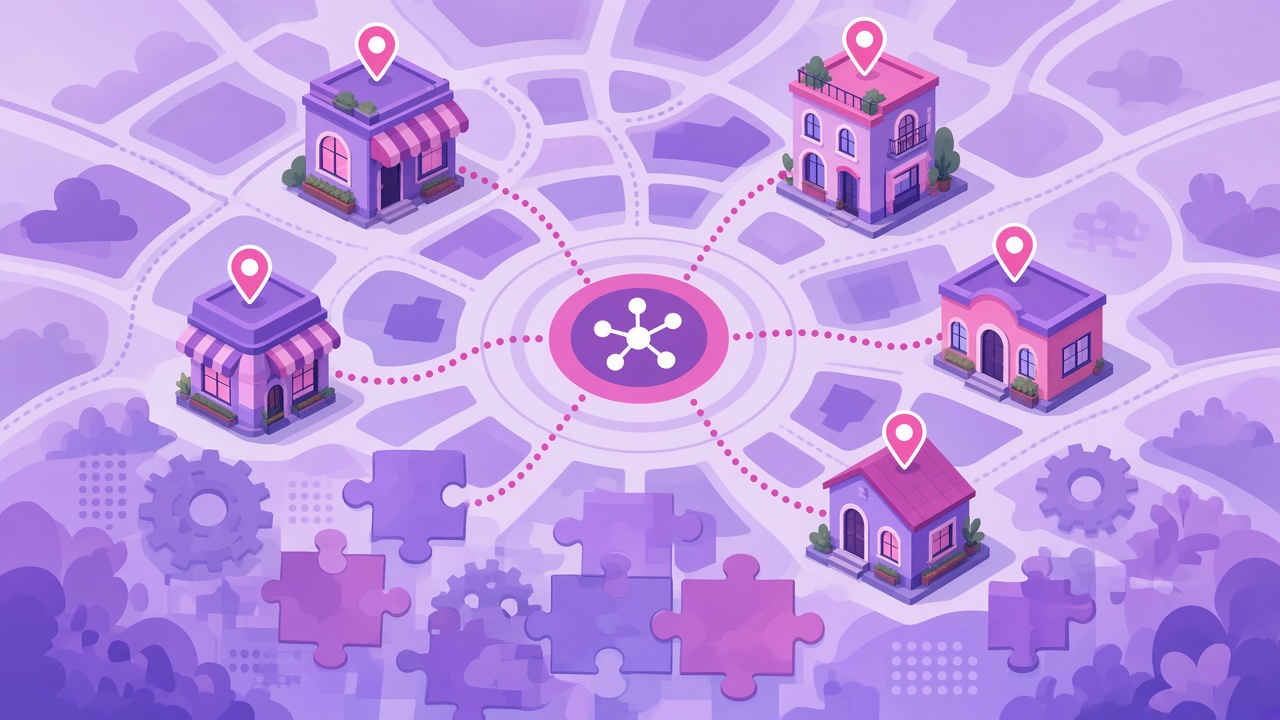
Brothel SEO for licensed venues rarely fails because of missing keywords or thin content alone. It fails because of hidden dependencies that connect technical structure, local signals, and operational reality.
A multi-location, multi-page site can look complete on the surface—service pages, location pages, clear calls to action—while still leaking crawl budget, sending mixed signals to search engines, and creating compliance friction. The strongest results come from treating those dependencies as the primary design constraints rather than as afterthoughts.
This walkthrough focuses on the practical connections that determine whether licensed venue SEO scales cleanly or creates ongoing cleanup work.
Why it matters?
Licensed venues operate under tighter public and platform expectations than many other adult businesses. Business information accuracy, consistent local presentation, and clear separation between locations are not optional extras; they affect both search visibility and operational risk.
When a multi-page site expands across cities or districts without deliberate structure, several problems compound: location pages compete with each other, NAP (name, address, phone) details drift out of sync, and local search compliance becomes harder to maintain.
Search engines evaluate the entire network of pages and signals. Weak location page SEO on secondary sites can limit the authority available to stronger ones. Inaccurate or inconsistent business information can suppress local pack visibility even when on-page optimization appears solid.
For operators managing multiple licensed premises, these dependencies determine whether growth in page count produces growth in qualified visibility or simply multiplies maintenance overhead.
Current-state diagnosis
Start with a full inventory rather than isolated page checks.
List every public-facing domain, subdomain, and significant location or service page. For each location, record the exact business name, address, phone number, and primary service description as they appear on the website, on any Google Business Profile, and in major directories. Discrepancies here are one of the most common hidden drains on local performance.
Examine the location page set. Note which pages receive impressions and clicks in Search Console, which are indexed, and which show signs of duplication or thin content. Multi-location sites frequently generate near-identical pages that differ only by city or suburb name. These pages consume crawl resources and can trigger quality filters that affect the wider domain.
Review internal linking and URL structure. Determine whether location pages are reachable through clear, logical paths or whether they rely on deep or orphaned structures. Check for parameter-based or filtered URLs that create additional indexable versions of the same content.
Finally, assess local search compliance posture. Confirm that the site does not imply coverage or services outside the licensed operational areas, and that any claims about licensing or premises remain consistent with public records. Gaps between website claims and actual licensed status create both search and operational exposure.
The diagnosis should surface the critical dependencies: where business information accuracy is weakest, which location pages add value versus noise, and how crawl and internal linking currently distribute attention across the multi-page site.
Step-by-step framework
A workable system addresses the dependencies in sequence.
1. Lock business information accuracy as the foundation
Create a single source of truth for every licensed location: legal or trading name, full address, primary phone, operating hours if published, and core service description. Every website page, Google Business Profile, and citation must draw from this source.
Schedule periodic audits to catch drift. Inconsistent NAP data is one of the fastest ways to undermine otherwise solid licensed venue SEO. Treat accuracy as a non-negotiable prerequisite before investing in further content or technical work.
2. Define location page roles and quality thresholds
Not every possible suburb or district requires its own page. Decide which locations justify dedicated pages based on actual licensed premises, genuine search demand, and the ability to produce unique, useful content.
Each location page should contain specific information about that premises or service area, clear differentiation from other location pages, and an unambiguous path to contact or inquiry. Pages that cannot meet a minimum uniqueness and usefulness standard should be consolidated or noindexed rather than published for coverage. Strong location page SEO depends more on substance than on volume.
3. Structure the multi-page architecture for clarity
Organize URLs and navigation so that the relationship between the main site, primary service pages, and location pages is obvious to both users and crawlers. Avoid deep nesting that hides location pages.
Use internal links deliberately: link from relevant service pages to the appropriate location pages, and from location pages back to core service information. This reinforces relevance without creating excessive cross-linking that can dilute focus.
4. Align local search signals and compliance
Ensure that Google Business Profiles (or equivalent local profiles) match the website’s business information exactly and reflect only the licensed locations. Service-area descriptions should stay within operational reality.
On the website, avoid language that overstates geographic coverage or licensing status. Local search compliance is easier to maintain when the public-facing information is conservative and consistent. Periodic checks against official licensing records help catch unintended discrepancies.
5. Control crawl and indexation across the multi-location set
Use robots.txt, canonical tags, and meta robots to prevent low-value or duplicate versions of location and service pages from consuming crawl budget. Monitor Search Console coverage reports for soft 404s, duplicate declarations, and “crawled – currently not indexed” statuses that often appear when multi-page sites expand quickly. Prioritize crawl attention toward the location and service pages that already demonstrate demand and conversion potential.
6. Connect measurement to the dependencies
Track not only rankings or sessions but the health of the underlying signals: consistency of business information across sources, indexation and performance of the core location page set, presence of internal competition between location pages, and any crawl anomalies that appear after content or structural changes. These metrics reveal whether the dependencies remain stable as the site grows.
Common pitfalls
Several patterns repeatedly undermine multi-location brothel SEO efforts.
- Publishing large numbers of thin location pages that differ only by place name. The short-term hope of capturing more local queries is usually outweighed by quality and crawl costs.
- Allowing business name, address, or phone details to diverge between the website, local profiles, and directories. Even small inconsistencies weaken local search signals.
- Treating every licensed location as an independent SEO project without shared standards for content quality and information accuracy.
- Over-optimizing location pages for broad city terms while neglecting the specific premises-level information that supports relevance and trust.
- Ignoring the interaction between location page SEO and overall domain quality. Weak secondary pages can limit the performance of stronger ones.
- Updating content or opening new location pages without verifying that local search compliance and business information accuracy remain intact.
These pitfalls are often invisible in surface-level ranking reports yet show up clearly in crawl data, local pack visibility, and inquiry quality.
Measurement and checklist
Focus on indicators that reflect the hidden dependencies:
- Consistency rate of core business information across website, local profiles, and major citations.
- Indexation status and organic performance of the defined core location page set.
- Volume of near-duplicate or thin location pages still indexed.
- Crawl stats showing distribution of attention between high-value location/service pages and lower-value URLs.
- Local visibility signals (local pack presence, profile engagement where available) for the primary licensed locations.
- Inquiry or contact volume attributable to the priority location and service pages.
Verification checklist before major expansion or redesign:
- Single source of truth for business information documented and applied across all public channels.
- Location pages limited to those that meet uniqueness and usefulness thresholds.
- Internal linking and URL structure make location hierarchy clear.
- Local profiles and website claims aligned with licensed operational areas.
- Crawl and indexation controls in place for the multi-page set.
- Baseline metrics captured for information accuracy, location page performance, and crawl health.
Re-run the checklist after any significant content or location changes. Dependencies that remain stable support growth; those that drift create recurring technical and visibility costs.
Next steps
Once the core dependencies—business information accuracy, location page quality, and local search compliance—are under control, further work becomes more predictable. New location pages can be evaluated against the same quality thresholds. Technical refinements can focus on protecting crawl budget for the pages that already convert. Content updates can reinforce differentiation rather than multiplying similar material.
The practical reality of brothel SEO for multi-location and multi-page websites is that surface tactics only work when the underlying connections remain intact. Operators who treat business information accuracy, disciplined location page SEO, and local search compliance as ongoing system requirements rather than one-time setup tasks build sites that scale more cleanly and require less continual repair.
If you are working through similar structural questions on a multi-location licensed venue site and want to compare approaches to information consistency, location page thresholds, or crawl allocation, the technical details are worth discussing. Technical notes on brothel SEO can serve as a reference point for the dependencies outlined here.