 admin
Every few months a new wave of advice claims that search is being replaced: by AI answers, by chatbots, by smart speakers. For adult businesses the claims come with extra confusion, because explicit content is filtered in ways that ordinary sites never think about.
This guide separates what is documented from what is hype. It covers how Google’s AI features choose pages, what voice assistants actually do with sensitive topics, which controls and crawlers matter, what structured data is still worth adding, and what to ask when you hire adult SEO specialists. It is written for adult business owners, directory operators and platform marketers, and it avoids explicit detail.
One note on sources. We reviewed 17 pages, mostly Google and OpenAI documentation. We did not find reliable, independent figures on how often adult queries trigger AI answers or voice responses, so we quote none. Where we are inferring rather than reporting, the text says so.
The short answer
Adult SEO for AI and Voice Search is mostly ordinary SEO plus a few deliberate choices. If your site is already crawlable, correctly classified, fast and genuinely useful, most of what AI and voice search need is already in place. Google says as much: there are no additional requirements to appear in AI Overviews or AI Mode, and you do not need special markup, new machine-readable files or AI-specific text files. The adult-specific risks are the old ones: wrong classification, blocked crawlers and thin pages.
What is new is a set of decisions about control. Do you want AI systems to use your content, and if so, which ones? That is a business choice, and the rest of this guide gives you the facts to make it.
How Google’s AI features choose pages
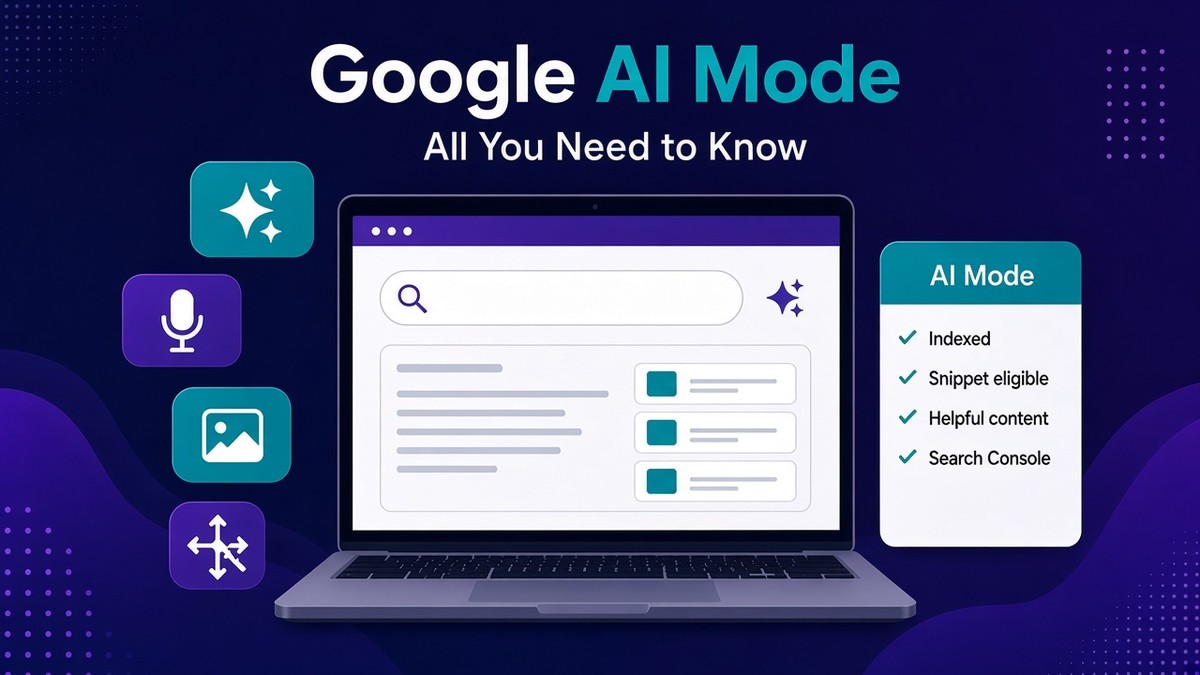
Google’s guidance for site owners on AI features in Search covers AI Overviews and AI Mode. Its main points:
- Eligibility is the same as ordinary Search. A page must be indexed and eligible to appear in Search with a snippet, and meet Search’s technical requirements. Meeting them does not guarantee crawling, indexing or serving.
- Related searches may be run behind the scenes. Google says these features may use "query fan-out", running several related searches across subtopics, which can surface a wider set of pages than a classic search shows. The two features use different models, so their links can differ.
- AI Overviews often do not appear. Google says they show only when its systems judge that they add value beyond classic Search.
- Traffic is counted in Search Console. Sites appearing in these features are included in the overall Web search type in the Performance report. There is no separate AI report to hunt for.
Google’s best-practice list will sound familiar: allow crawling, use internal links, provide a good page experience, keep important content in text form, support it with quality images and video, and make sure structured data matches the visible text. Nothing on the list is new, which is the point.
What changes for adult sites
Four adult-specific points sit on top of that general guidance.
Classification still comes first. Google’s guidelines for sites with explicit content explain SafeSearch classification: group explicit pages on their own domain or subdomain, mark them with an adult rating or RTA label, and let verified Googlebot through any age gate. We found nothing stating how SafeSearch interacts with AI features, so treat it as an open question. The safe working assumption is that a page Google cannot fetch or classifies badly will not do well in any Google surface.
Eligibility depends on being snippet-eligible. If a page is blocked from snippets, it is not eligible for these features. Check that your own nosnippet or max-snippet rules are not on pages you want to be seen, and use them deliberately on pages you want protected.
Answers may be filtered. Google’s help pages show that voice assistants apply their own filters. On Google smart speakers and displays, Gemini for Home uses filters to limit inappropriate content, and Google calls them imperfect. The Gemini for Home response filter is described as "typically sensitive to explicit content and graphic violence". Voice-matched children under 18 always receive filtered answers, and an account owner can choose to filter guests or everyone. The pages show no default setting and no date. Our inference, not a documented fact, is that explicit queries are a poor target for voice and that business and informational queries are the realistic opportunity.
Your audience may not ask by voice at all. We found no source on how adult searchers use voice. Do not build a strategy on the assumption that they do.
Voice search: what is realistic
Voice search is not a separate engine. It is a way of asking, and answers generally come from the same systems as typed search. That has three practical consequences.
- Featured snippets are the main documented route. Google describes featured snippets as results that show a descriptive snippet first. You cannot opt a page in. Google’s systems decide, and you can only opt out with nosnippet, data-nosnippet or max-snippet. Write clear, direct answers in text and let the systems choose.
- Speakable markup is not for most sites. Google’s speakable structured data is in beta, applies to Article or WebPage markup, and is aimed at news content. Google says it works for US users with Google Home devices set to English and for English-language publishers. An adult business or directory is not its target, so do not spend time on it.
- Question phrasing helps people, not systems. Writing headings as natural questions, with a short answer first, makes a page easier for readers to scan. It is good editing, and it is not a documented ranking trick.
For B2B adult-industry topics, such as choosing a payment provider, understanding age-verification rules or hiring a specialist, spoken-style questions are plausible. For explicit consumer queries, the filtering above suggests caution.
Structured data: what is still worth doing
Google’s general structured data guidelines are strict, and they matter more as AI features pull from pages.
- Mark up only what users can see. Google’s wording is "Don’t mark up content that is not visible to readers of the page." Hidden or misleading markup, such as fake reviews, can lead to a manual action that removes rich result eligibility.
- Valid markup is not a guarantee. It enables a rich result but does not ensure one will show.
- JSON-LD is the recommended format.
Two specific points:
- FAQ rich results are gone. Google’s FAQ documentation was removed on 15 June 2026, and the feature is no longer shown in Search. If a guide tells you to add FAQ schema for rich results or for AI visibility, check its date. A visible FAQ section is still useful for readers, but it is not a route to a special result.
- Organization markup is still useful for identity. Google describes it as a way to help distinguish your organization from others, with properties such as name, url, logo, sameAs and contactPoint. No property is required, and Google does not guarantee display. For an agency, directory or platform, accurate organisation details on the home or About page are cheap and sensible.
Add VideoObject markup to video pages, following Google’s video guidance, since that is documented and relevant to adult sites with video libraries.
Which crawlers do you want?
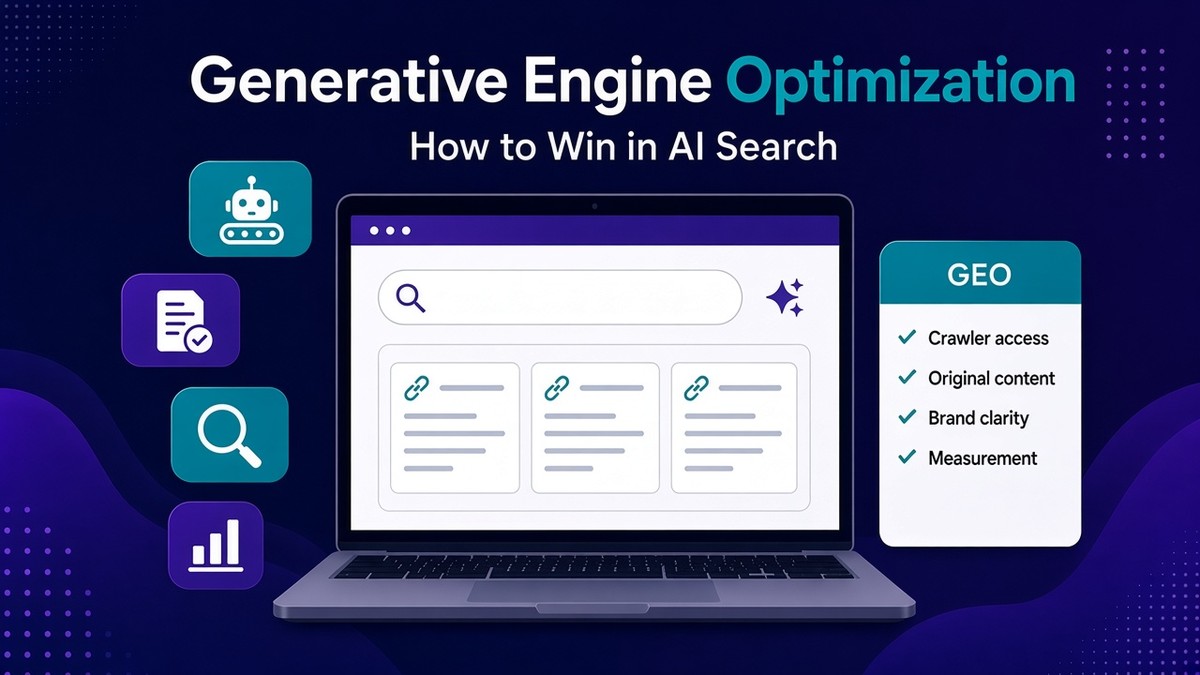
Traditional SEO had one crawler to worry about. AI adds several, each with a different purpose. This is a decision to make on purpose, not by default.
|
Control |
What it governs |
Source note |
|
Googlebot |
Crawling for Google Search, including AI Overviews and AI Mode |
Google AI features page |
|
Google-Extended (robots.txt token) |
Whether crawled content can train future Gemini models and be used for grounding in Gemini Apps and Vertex AI. Does not affect Search inclusion or ranking |
Google crawler documentation, updated 15 October 2026 |
|
OAI-SearchBot |
Surfacing sites in ChatGPT search features. Controlled by robots.txt |
OpenAI bots documentation |
|
GPTBot |
Crawling for content that may be used to train OpenAI models. Controlled by robots.txt |
OpenAI bots documentation |
|
ChatGPT-User |
Visits when a user asks ChatGPT to look at a page. OpenAI says robots.txt rules may not apply because the action is user-initiated |
OpenAI bots documentation |
Three practical points follow.
Blocking training is not the same as blocking search. OpenAI says a site opted out of OAI-SearchBot will not appear in ChatGPT search answers, though it can still show as a navigational link. Blocking GPTBot is a separate choice. Google says Google-Extended is not used as a ranking signal and does not affect inclusion in Search.
Verify, do not trust user-agent strings. Anyone can claim to be a crawler. Google documents a reverse and forward DNS check, and published IP ranges, for confirming Googlebot, and OpenAI recommends allowing requests from its published ranges. The same discipline applies to your age gate: verified crawlers should be able to reach content, and unverified ones should not be waved through.
Your CDN and firewall count. Google’s best practices say to allow crawling in robots.txt and in any CDN or hosting setup. Adult sites often run aggressive bot protection, and it can block legitimate crawlers without anyone noticing.
Whether to allow AI crawlers is a commercial and legal decision. Some adult operators will want maximum visibility. Others will not want their content used for training. We take no side, but we do recommend the choice be written down and reviewed, not left to whatever the firewall does.
Content that suits both people and machines
None of the sources we read describe a content format that AI systems reward. What they describe is standard good practice, and we have kept to that.
- Keep important content in text. Google lists this explicitly. Key facts hidden in images, video only or scripts are harder to find.
- Lead with the answer. Put a short, direct answer under each question heading, then the detail. Readers, snippets and voice assistants all benefit.
- Be clear about who is behind the page. Google’s helpful-content guidance asks who created the content, how and why. Bylines, an About page and honest business details help readers and are part of the evidence people use to judge a page.
- Be original. Google’s spam policies cover scaled content abuse, meaning many pages produced mainly to manipulate rankings, however they are made. Mass-producing AI text across thousands of listings is the fastest way into that policy.
- Keep it accurate. Adult-industry topics such as age verification and payments change. Date your pages, and update them.
For directories and platforms, entity clarity matters. Make each listing page say who or what it describes, where, and why it is worth reading, in text a person could follow. Do not use that clarity to produce doorway-style duplicates.
Technical readiness checklist
|
Area |
What to confirm |
Source basis |
|
Crawl access |
Googlebot and any AI crawlers you want are not blocked by robots.txt, CDN or firewall |
Google AI features; OpenAI bots |
|
Classification |
Explicit pages grouped, rated, and reachable by verified Googlebot |
Google, explicit content |
|
Snippets |
No accidental nosnippet or low max-snippet on pages you want shown |
Google AI features; featured snippets |
|
Text content |
Key facts in text, not only in images or scripts |
Google AI features |
|
Structured data |
JSON-LD matching visible content; Organization and VideoObject where relevant |
Google structured data guidelines |
|
FAQ markup |
Not used for rich results; visible FAQs only for readers |
Google, FAQ documentation removal |
|
Page experience |
Core Web Vitals checked from field data |
Google AI features; page experience |
|
Reporting |
Search Console Performance report, Web search type |
Google AI features |
How to measure it
Google says traffic from AI features is included in the Web search type in Search Console, so you cannot split it out there. Practical measures:
- Track impressions and clicks for the questions and topics you have written for, and compare before and after changes.
- Check server logs for the crawlers in the table above, and confirm any claimed Googlebot hits with the DNS or IP check.
- Look at referral traffic from AI products in your analytics. Treat small numbers with care.
- Test your own priority questions by hand, from a clean browser profile, and record the date. Results vary by user, location and device, so repeat the test and do not read too much into a single run.
Do not trust any tool that claims to measure "AI visibility" without explaining its method, and do not treat a single answer as a ranking.
Claims to treat with caution
- "AI search needs a new kind of optimisation." Google says there are no additional requirements for AI Overviews and AI Mode, and no special schema or files.
- "Add FAQ schema to be cited." Google removed FAQ rich results in June 2026.
- "Voice search will drive your adult traffic." No source we found supports this, and the assistant filters we read about point the other way for explicit topics.
- "Block every AI crawler to protect your content," or "allow every one." Each crawler has a different purpose. Decide per crawler.
- "Guaranteed AI citations." No one controls what an AI system shows. Google’s hiring guidance says no one can guarantee a result.
- Fixed percentages for AI or voice share. We found none that were independent and adult-specific.
Hire adult SEO specialists: what to look for
AI and voice work mixes technical SEO, content and policy. The person who writes a robots.txt rule for AI crawlers is making a business decision, and which is why it pays to hire adult SEO specialists who understand adult-niche constraints.
What the role should cover
- Crawl and classification: robots.txt, CDN and firewall rules, SafeSearch grouping, rating tags and Googlebot verification.
- Crawler policy: a documented decision for Google-Extended, OAI-SearchBot, GPTBot and others, with a review date.
- Content and structured data: people-first pages, accurate JSON-LD, and no reliance on removed features.
- Measurement: honest reporting from Search Console, logs and analytics, including what cannot be measured.
- Link and spam discipline: staying inside Google’s spam policies.
Questions to ask before you sign
- What do you change for AI search that you would not change for ordinary SEO, and what is your evidence?
- How will you decide which AI crawlers to allow, and who signs off?
- How do you check that crawlers hitting our site are genuine?
- How will our age gate treat verified crawlers?
- How do you report on AI-related traffic when Search Console does not separate it?
- What access do you need, and who owns the accounts?
Google’s own advice is to be wary of guaranteed rankings and secretive methods. An adult SEO agency that answers question 1 with "mostly the fundamentals, plus a crawler policy" is giving an honest answer.
A 90-day plan
Days 1 to 30: foundations. Audit crawl access across robots.txt, CDN and firewall. Check classification, the age gate and verified Googlebot access. Remove accidental snippet restrictions. Check structured data against visible content and remove reliance on FAQ rich results.
Days 31 to 60: content and policy. Rewrite your top pages so key facts are in text, with direct answers under question headings. Add accurate Organization and VideoObject markup. Write down your crawler policy.
Days 61 to 90: measure and review. Compare Search Console data before and after. Review server logs. Re-test your priority questions by hand. Update anything that has changed, such as age-verification guidance.
These are phases of work, not promised results.
Frequently asked questions
Do I need special optimisation for AI Overviews?
No. Google says there are no additional requirements beyond being indexed and snippet-eligible, and that no special markup or files are needed.
Should I block AI crawlers?
It depends on your goals. Each crawler has a different job, and blocking a training crawler is separate from blocking a search crawler. Decide per crawler and write it down.
Is voice search relevant to adult sites?
It may be for business and informational topics. Voice assistants apply filters to explicit content, so explicit consumer queries are a weak target. We found no data on adult voice usage.
Does FAQ schema still help?
Google stopped showing FAQ rich results and removed the documentation in June 2026. A visible FAQ can still help readers.
Can anyone promise AI visibility?
No. Treat any such promise as a warning sign.
Next steps
Being ready for AI and voice search mostly means doing the unglamorous things well and making a few deliberate choices: who can crawl, what is shown, and where your content is clear enough to quote. Start with crawl access and classification, because everything else depends on them.
If you want a second pair of eyes on your site, Escort Marketing Agency (EMA) is a B2B digital marketing agency that works with adult businesses on technical SEO and search strategy. Contact us to discuss your goals and get a free audit.
*This article is general information and not legal advice. Check the rules for each market you serve.*
References
- Google Search Central, "AI features and your website" (updated 10 December 2025): https://developers.google.com/search/docs/appearance/ai-features
- Google Search Central, "Featured snippets and your website" (updated 10 December 2025): https://developers.google.com/search/docs/appearance/featured-snippets
- Google Search Central, "Speakable structured data (beta)" (updated 8 September 2026): https://developers.google.com/search/docs/appearance/structured-data/speakable
- Google Search Central, "FAQ structured data" (documentation removed 15 June 2026): https://developers.google.com/search/docs/appearance/structured-data/faqpage
- Google Search Central, "General structured data guidelines" (updated 10 July 2026): https://developers.google.com/search/docs/appearance/structured-data/sd-policies
- Google Search Central, "Organization structured data" (updated 8 September 2026): https://developers.google.com/search/docs/appearance/structured-data/organization
- Google Search Central, "Google’s common crawlers" (updated 15 October 2026): https://developers.google.com/search/docs/crawling-indexing/google-common-crawlers
- OpenAI, "Overview of OpenAI crawlers" (undated): https://developers.openai.com/api/docs/bots
- Google Nest Help, "Restrict content on your Google smart speakers and displays" (undated): https://support.google.com/googlenest/answer/7084229
- Google Home Help, "Filter Gemini for Home voice assistant responses" (undated): https://support.google.com/googlehome/answer/16686363
- Google Search Central, "Guidelines for sites with explicit content": https://developers.google.com/search/docs/specialty/explicit/guidelines
- Google Search Central, "Verifying Googlebot and other Google crawlers" (updated 20 March 2026): https://developers.google.com/search/docs/crawling-indexing/verifying-googlebot
- Google Search Central, "Video SEO best practices" (updated 18 December 2025): https://developers.google.com/search/docs/appearance/video
- Google Search Central, "Spam policies for Google web search" (updated 28 August 2026): https://developers.google.com/search/docs/essentials/spam-policies
- Google Search Central, "Creating helpful, reliable, people-first content": https://developers.google.com/search/docs/fundamentals/creating-helpful-content
- Google Search Central, "Do you need an SEO?" (updated 5 June 2026): https://developers.google.com/search/docs/beginner/do-i-need-seo
- Google Search Central, "Search Essentials" (updated 10 December 2025): https://developers.google.com/search/docs/essentials