 admin
Healthcare marketing content must do more than attract attention. It needs to communicate medical information accurately, represent clinical services responsibly, and help readers understand their options without creating misleading expectations. Achieving that standard becomes difficult when healthcare writers, editors, clinicians, and marketing managers work to different deadlines or follow inconsistent approval procedures.
A writer may understand content strategy but lack the clinical expertise to verify a treatment claim. An editor may improve readability while unintentionally changing its medical meaning. A clinician may approve the facts without checking whether the headline accurately represents them. Without clearly assigned responsibilities, these gaps can reach publication.
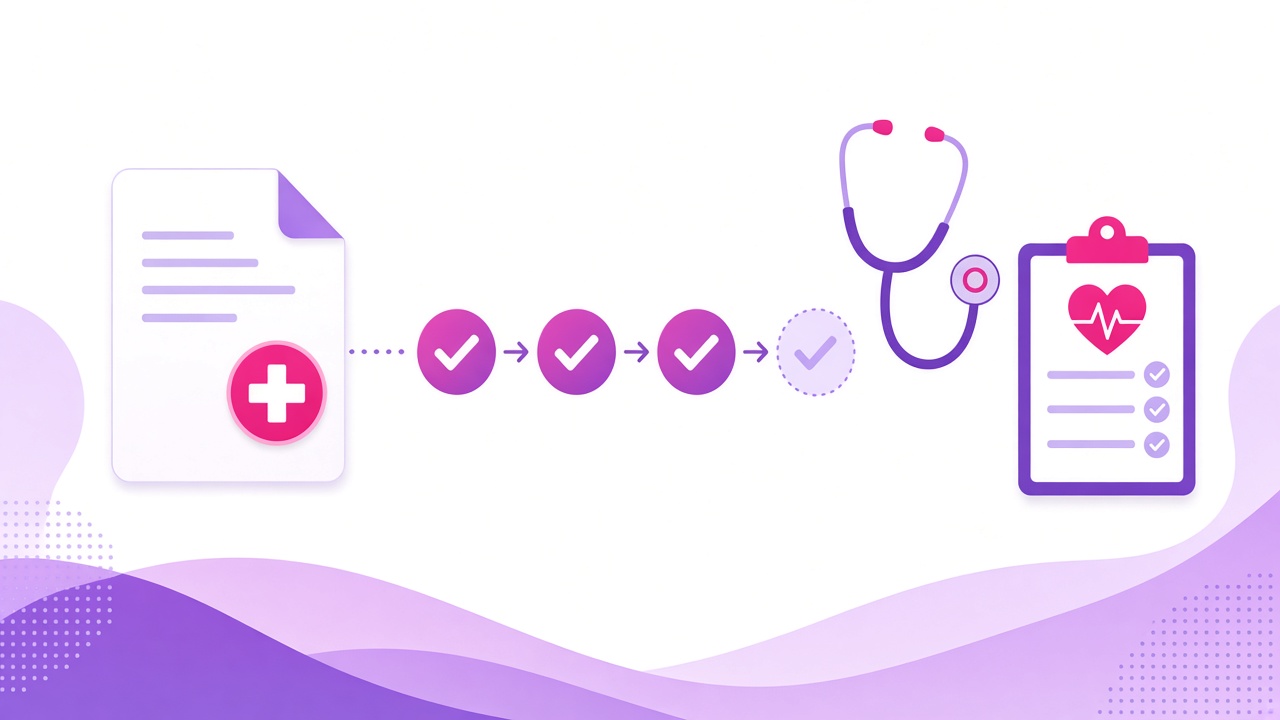
Building a clinical review workflow for marketing content requires a structured process that defines who checks the information, who approves the final version, and when published content needs another review.
For healthcare writers, editors, and clinical reviewers, the objective is straightforward: create useful, accessible content while maintaining clinical accuracy, accountability, and appropriate professional oversight.
Why Healthcare Marketing Content Needs Clinical Review?
Healthcare content can influence how people understand symptoms, diagnostic tests, treatment options, and preventive care. Inaccurate wording may lead readers to misunderstand a condition or interpret general educational material as personalised medical advice.
The risks extend beyond factual errors. Outdated service descriptions, unsupported treatment claims, misleading headlines and incomplete qualifications can undermine trust in a healthcare organisation.
A clinical review workflow helps teams:
- Verify medical claims against appropriate evidence.
- Ensure that editorial changes preserve clinical meaning.
- Identify statements requiring clarification or qualification.
- Assign responsibility for final approval.
- Establish a consistent process for updating published material.
- Maintain records of decisions and substantive revisions.
Within healthcare content marketing, these safeguards should support the entire content lifecycle, from the initial brief to publication and subsequent review. Clinical approval should not be an informal final check performed only when someone has spare time.
The Core Principles of an Effective Clinical Review Workflow
- Define reviewer roles before production begins
Every content project should identify the people responsible for writing, editing, clinical verification, and publication approval. One person may hold several responsibilities in a small practice, but the required checks should remain clear.
The writer develops the initial draft and identifies supporting sources. The editor improves structure, clarity, and consistency. The clinical reviewer verifies medical accuracy and appropriate context. The content owner or communications lead confirms that the final version meets organisational and publishing requirements.
This separation prevents an important assumption: editorial approval does not automatically establish clinical accuracy, and clinical approval does not necessarily confirm that every marketing or compliance requirement has been met.
- Match clinical oversight to the content’s risk
A general announcement about clinic opening hours does not usually require the same level of medical scrutiny as an article discussing medication, diagnostic criteria, or treatment risks.
The review process should reflect the subject matter, specificity of the claims, intended audience, and potential consequences of misunderstanding. High-risk or specialised content may require review by a clinician with relevant expertise.
- Preserve meaning while improving readability
Healthcare content often needs plain language, shorter sentences, and clear explanations. However, simplifying a medical statement must not remove essential qualifications or imply certainty where evidence is limited.
Editors should flag substantive changes to clinical wording rather than silently making them. Reviewers can then confirm that the revised text remains accurate and appropriately qualified.
- Establish explicit approval and update rules
Approval should identify the exact version reviewed, the reviewer, the date, and any outstanding conditions. A significant change to an approved medical claim should trigger another clinical review.
The same principle applies after publication. New guidance, corrected information, changes to a service, or a newly identified error may require an earlier review than the routine schedule.
A Step-by-Step Process for Building a Clinical Review Workflow
A repeatable workflow helps teams manage content efficiently without weakening essential safeguards.
Step 1: Create a structured content brief
Before drafting, document the topic, intended audience, objective, publication channel, and main message. Identify the clinical claims the content needs to make and the sources that will support them.
The brief should also specify whether the content discusses diagnosis, treatment, prevention, recovery, service availability, or general health education. These distinctions help determine the appropriate reviewer.
For example, an article explaining what happens during a routine consultation may need a different review approach from a page describing treatment eligibility or potential complications.
Step 2: Identify authoritative sources
Writers should collect relevant clinical references before finalising the draft. Depending on the topic, these may include current professional guidelines, official public health resources, peer-reviewed research, and approved institutional guidance.
Check publication dates, applicability, and whether a source supports the exact claim being made. A study involving a specific patient population may not justify a broad statement about every patient.
Keep references accessible to the reviewer. Where evidence is uncertain, conflicting or evolving, flag the issue instead of presenting one interpretation as established fact.
Step 3: Draft with traceable claims
The first draft should distinguish factual medical statements from general explanations, organisational information and promotional language.
A practical method is to maintain a claim log alongside the draft. For each material clinical claim, record the supporting source and any qualifications needed. This makes verification easier and helps reviewers focus on statements that could affect a reader’s understanding.
Writers should also identify claims that need specialist input rather than attempting to resolve every clinical question independently.
Step 4: Complete the editorial review
The editor checks structure, readability, grammar, terminology, tone, and consistency. They should also look for unsupported superlatives, absolute statements, ambiguous wording, and headlines that promise more than the content supports.
For example, changing “may help manage certain symptoms” to “eliminates symptoms” is not a stylistic improvement. It materially changes the claim and requires evidence that supports the stronger wording.
The editor should flag these issues for clinical review and avoid introducing new medical claims without supporting references.
Step 5: Conduct the clinical review
The designated clinician evaluates the draft’s medical accuracy, completeness, and appropriate context. The review should consider:
- Whether each substantive medical claim is supported.
- Whether risks, limitations, or relevant exceptions are omitted.
- Whether terminology is accurate and understandable.
- Whether the headline, examples and conclusion reflect the evidence.
- Whether the material could be mistaken for individualised medical advice.
- Whether the information remains current for the intended audience.
The reviewer should record corrections, queries and approval status. If the content falls outside their expertise, they should request review by a suitably qualified colleague.
Step 6: Resolve comments and obtain final approval
The writer or editor addresses the feedback and returns unresolved clinical questions to the reviewer. The team should avoid marking a draft approved while material questions remain unanswered.
Once revisions are complete, the designated approver checks the final version. The approved file or content-management-system version should be identifiable, with its approval date and relevant review records.
If a later change affects a medical claim, the revised wording must return to the clinical reviewer. Minor formatting changes may follow a lighter process if they do not alter meaning and organisational policy permits it.
Step 7: Publish and schedule future reviews
Before publication, confirm that the live page matches the approved version. Check titles, images, captions, references, links and any accompanying promotional statements.
Assign an owner and review date to content that may become outdated. Time-sensitive clinical guidance may need earlier reassessment than general evergreen educational material.
Review triggers should include new authoritative guidance, changes in clinical practice, corrections to source material, changes to the service described, and credible reports of a potentially harmful error.
Step 8: Correct published content when necessary
If the team identifies a material inaccuracy after publication, assess its potential impact and escalate it to the appropriate clinical or compliance lead. Depending on the issue, the team may need to correct, temporarily remove, or replace the content.
Record the issue, correction, decision-maker, and date. If the error could affect readers’ understanding of an important health matter, consider whether a visible correction or other communication is warranted.
A documented correction process is more reliable than making silent edits without understanding the reason for the change.
Common Mistakes and Compliance Considerations
- Treating approval as a formality
A glance from a clinician does not replace a meaningful review. Provide enough time, context, and supporting references for the reviewer to assess the actual claims.
- Using outdated or unsuitable references
A credible source may still be inappropriate if it no longer reflects current guidance or does not apply to the intended population. Set a process for checking whether references remain relevant when content is refreshed.
- Allowing marketing language to overstate evidence
Avoid unsupported claims about guaranteed outcomes, universal effectiveness, or clinical superiority. Marketing objectives should never override the evidence or the qualifications necessary to communicate it accurately.
- Overlooking privacy and confidentiality
Do not include identifiable patient details in drafts, review comments or illustrative examples unless there is an appropriate, authorised basis for doing so. Removing names alone may not prevent identification. Follow applicable privacy laws, consent requirements and internal access controls.
- Confusing education with personalised medical advice
General educational material should not imply that it can diagnose an individual or replace appropriate professional assessment. The wording and any disclaimers should fit the actual content rather than serve as a substitute for accuracy.
For organisations operating in India, review applicable professional conduct requirements and other relevant legal obligations. The National Medical Commission’s official resources can help teams locate applicable regulations, but the precise requirements should be assessed for the provider, content, and context involved.
Measuring Workflow Quality and Deciding What to Improve
A clinical review process should be assessed by its reliability, not simply by how quickly content moves to publication.
Track a small set of operational indicators:
- Approval coverage: The proportion of posts or pages with documented clinical approval where required.
- Revision patterns: The frequency of recurring factual errors, unsupported claims, and avoidable editorial changes.
- Review turnaround: The time between submission, reviewer feedback, and final approval.
- Correction frequency: The number and nature of substantive inaccuracies identified after publication.
- Update compliance: The proportion of time-sensitive pages reviewed by their assigned deadlines.
Interpret these measures together. A short review turnaround is useful only if the review remains thorough. A high revision count may indicate stronger quality control, but repeated corrections to the same types of claims may reveal gaps in the briefing or writing process.
Hold periodic workflow reviews with writers, editors, and clinical reviewers. Identify recurring bottlenecks, clarify responsibilities, and update guidance where needed. If approvals are consistently delayed, for example, the solution may be earlier clinician involvement or a more realistic publishing calendar rather than removing a necessary review stage.
The workflow should also adapt when a practice introduces new services, changes its content channels, or encounters new clinical and compliance requirements.
Clinical Review Workflow Checklist
Before considering the process complete, confirm that:
- Every content item has a defined purpose and owner.
- Clinical claims have appropriate supporting references.
- Editorial and clinical responsibilities are documented.
- Reviewers have relevant expertise and sufficient context.
- Feedback and unresolved questions are tracked.
- Material revisions receive renewed clinical approval.
- Privacy, consent, and compliance checks are completed.
- The approved version is identifiable and stored appropriately.
- Publication and future review dates are recorded.
- A correction and escalation process is available.
Conclusion
Building a clinical review workflow for marketing content requires clear reviewer roles, evidence-based factual checks, explicit approvals and defined update triggers. When these elements work together, healthcare teams can produce accessible marketing content without compromising clinical accuracy or accountability.
The most effective workflow is one that fits the organisation’s size and risk profile while making essential checks consistent and traceable. Writers, editors and clinicians should understand not only what they need to review, but also when they must escalate an issue and when previously approved content needs reassessment.
Healthcare teams looking to coordinate these processes with their wider marketing activities can explore the Healthcare Digital Marketing service from Doctors Branding Agency for relevant service details.