 admin
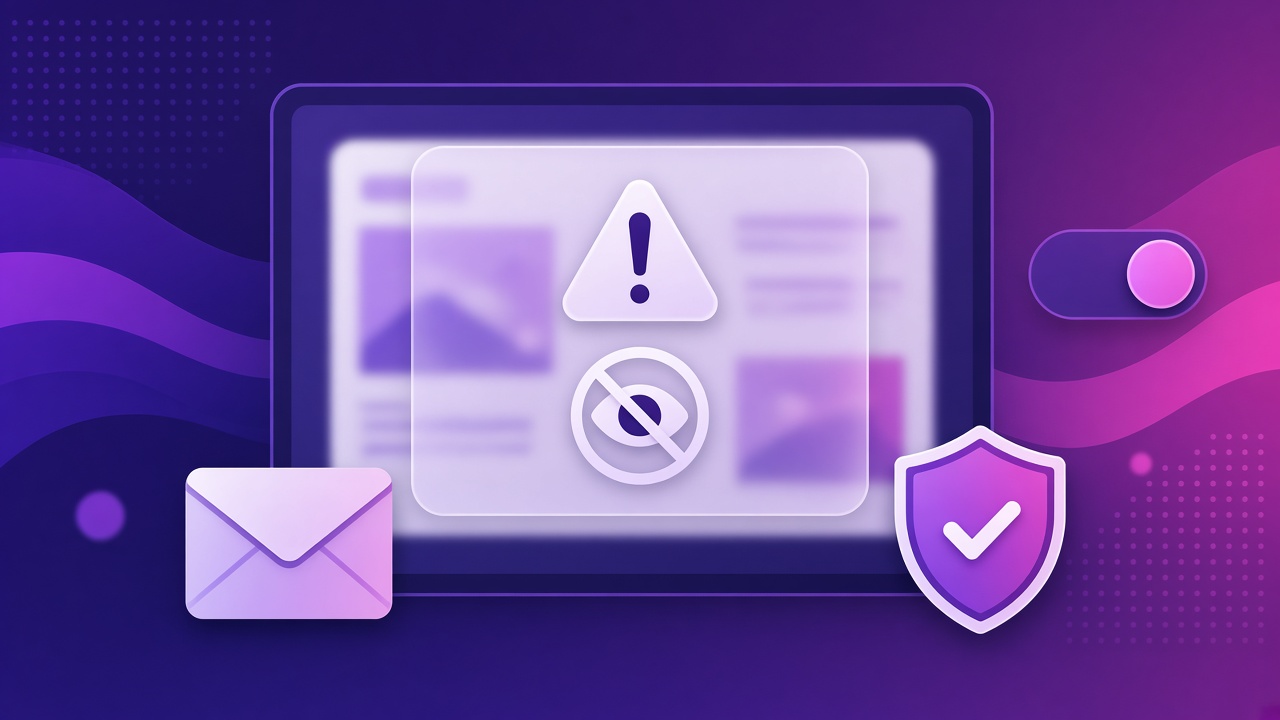
An NSFW warning is a small label with a big job. It tells people that the content ahead may be sexual, nude or graphic, and lets them decide whether to open it at their desk, on a train or in front of their family. For adult businesses, it is also a signal to platforms, payment partners and search engines that you know where the line sits.
Yet most advice on the topic stops at the definition. This guide goes further. It explains what an NSFW warning is and is not, when to use one, how the major platforms and the law treat labelling, and how to write warnings that work. It is written for adult business owners, directory operators and platform marketers who publish content in public, and it avoids explicit detail.
What does NSFW mean?
NSFW stands for "not safe for work", sometimes written "not suitable for work". It is internet shorthand for content a viewer may not want to open in a public, formal or controlled setting, such as an office or a classroom. It usually covers sexual material and nudity, and often graphic violence, strong profanity or other disturbing content.
The term has a short history. Wikipedia reports that it may have grown out of "NFBSK" (not for British school kids), seen online as early as 2000, and that a definition appeared on Urban Dictionary in 2003. Mainstream dictionaries followed: Oxford Dictionaries Online in 2011, Merriam-Webster in 2015 and the Oxford English Dictionary in 2016. Other guides credit Reddit and 9Gag with popularising the label, but that claim is unsourced, so treat it as unverified.
Two related labels are worth knowing:
- SFW (safe for work) marks content without such material, especially when a title might suggest otherwise.
- NSFL (not safe for life) marks content so disturbing that it may be emotionally harmful, such as extreme gore. It is a different category from adult content and is not used for sexual material.
What an NSFW warning is for, and what it is not
An NSFW warning is a courtesy and a navigation aid. It lets the reader choose. That is all it does, and it is worth being clear about the limits.
It is not an age gate. A label does not stop a minor from clicking. One brand glossary describes the tag as a courtesy warning rather than an age gate or paywall, and regulators take the same view. Ofcom, for example, says that self-declaration is not enough to protect children from pornography in the UK.
It is not legal compliance. Some laws require specific labels, as the email section below shows. Others require age assurance, consent records or restricted distribution. A tag on a post satisfies none of those on its own.
It is not a search classification. Google’s guidance for explicit content is about how pages are grouped, marked and crawled. It does not mention warning screens or disclaimers as a way to avoid classification. A page that carries an "NSFW" banner can still be treated as explicit, and a clean page can be misclassified if it sits among explicit ones.
It is not a trigger-warning programme. Research on trigger warnings is a separate field with mixed results. A 2022 meta-analysis of 12 reports found negligible effects on distress after viewing (d = 0.02) and on avoidance (d = 0.06), and a small to moderate increase in anticipatory distress (d = 0.43). The authors concluded that such warnings should not be used as a mental-health tool. That research concerns distressing material, not adult commerce, but it is a useful reminder not to oversell what a label can do. An NSFW tag is a practical signal about setting and audience, not a wellbeing intervention.
So, what is it good for? Four things. It protects readers from unwelcome surprises at work. It reduces complaints. It helps platforms route content correctly. And it shows partners that you label consistently.
When should you use an NSFW warning?
Use one whenever a reasonable person could be embarrassed, offended or disciplined for opening your content in a public or workplace setting. In practice that means sexual content, nudity and graphic violence, plus anything a platform’s rules require you to mark.
The harder calls are the borderline cases. Use this table as a starting point and apply your own judgement.
|
Content |
Label? |
Also consider |
|
Explicit sexual material or nudity |
Yes, always |
Age assurance, platform adult setting, separate domain on the web |
|
Sexually suggestive imagery without nudity |
Usually yes |
Check each platform’s "sensitive" category and ad rules |
|
Graphic violence or gore |
Yes, as NSFW or a specific graphic-media label |
NSFL if extremely disturbing |
|
Strong language only |
Optional |
Depends on audience and platform norms |
|
Sex-education or health content |
Sometimes |
Context matters; a plain description may be better than a tag |
|
Links in your newsletter or social bio that lead to adult pages |
Yes, on the link or the page it points to |
Do not rely on the label alone to protect the destination |
|
Adult-industry business news with no explicit imagery |
No |
Over-labelling dilutes the signal |
Over-labelling has a cost. If everything is NSFW, the tag stops meaning anything and readers learn to ignore it. If nothing is, you risk complaints and enforcement. Aim for a rule your whole team can apply the same way.
Business contexts where labelling matters
- Social posts and profiles, where platform settings often govern how your media appears to others.
- Email newsletters, where the US has a specific legal rule (below).
- Directory listings and landing pages, where visitors arrive from search or from ads.
- Link-in-bio pages, which sit between a mainstream platform and your own site.
- Shared files and client reports sent to colleagues who may open them at work.
How the main platforms handle labelling
Each platform draws the line differently, and the rules change. The summaries below come from the platforms’ own help pages, which carry no dates, so check them again before you rely on them.
|
Platform |
What the page says |
Practical point |
|
X |
Users can turn on a setting that marks media they post as potentially sensitive, or flag individual images and videos as Nudity, Violence or Sensitive. Repeatedly uploading unmarked sensitive media may lead to action, and X also uses automated labelling. Violations in profile or header images can lead to suspension. |
Mark media at upload and keep profile and header images clean. |
|
Bluesky |
Users can self-label posts and profiles with |
Choose the label that matches the content, not the mildest one. |
|
Patreon |
A campaign must be Adult/18+ if any work contains sexually explicit content or nudity, with a brief age verification. Safe for All Audiences is for campaigns with no such works. Patreon says the categories exist because payment processors require the distinction. |
The label is tied to payments, not only to courtesy. |
|
Google Ads |
Nudity is strongly restricted; partial nudity, sexual entertainment and suggestive themes are moderately restricted. Restricted ads are limited by user age, local law and SafeSearch, and run on the Search Network only. Some countries, including India, block all sexual content ads. |
Ad policy is separate from content labelling. |
Two cautions apply. First, none of these pages promises that a label will protect you from enforcement. Second, platforms differ on what counts as "sensitive". Content that is fine on one service can be restricted on another, so keep a short table of rules for each channel your team uses.
Email: the one place the label is law
In the United States, the label for sexually oriented email is a legal requirement. Under a Federal Trade Commission rule issued under the CAN-SPAM Act, commercial messages that contain sexually oriented material must begin the subject line with "SEXUALLY-EXPLICIT:". When the recipient opens the message, the first view must contain only that label and the standard commercial email disclosures, with no graphics. The FTC describes this as a "brown paper wrapper". The rule does not apply where the recipient has given affirmative consent to receive that sender’s sexually oriented messages.
The rule took effect on 19 May 2004. The FTC’s 2004 announcement said individuals could face fines of up to $250,000 and organisations up to $500,000 for violations, along with possible criminal sanctions. The FTC’s compliance guide, dated August 2023 and edited in January 2024, lists civil penalties of up to $53,088 for each violating email. Penalty amounts are adjusted over time, so confirm the current figure.
Other CAN-SPAM duties apply as well: accurate headers, non-deceptive subject lines, identification as an advertisement, a valid postal address and a working opt-out honoured within 10 business days.
Three practical points follow for adult email marketing:
- Collect clear consent. Consent changes which format applies, and it is also good practice.
- Check your email platform’s rules before sending. Providers set their own acceptable-use terms.
- Do not assume other countries follow the same rule. Laws on direct marketing and adult content differ, and this is not legal advice. Take advice from a qualified adviser for each market you target.
How to write an effective NSFW warning
A good warning is brief, honest and placed where the reader needs it. The following habits work across channels.
- Put it first. The label belongs at the start of a title, subject line or caption, before the reader commits.
- Use plain, familiar wording. "NSFW" is understood almost everywhere. Add a short descriptor only if it helps, such as "NSFW: adult content".
- Describe the category, not the detail. The warning should not itself be graphic. "Contains nudity" is enough.
- Hide the content until the click. Where the platform offers blur, a content warning screen or a hidden-media setting, use it. A label above visible content defeats the purpose.
- Be consistent. Use the same label, in the same position, every time. Readers and moderators learn the pattern.
- Label the link and the destination. If a mainstream post links to an adult page, mark the post and make sure the page opens with its own notice or gate.
- Add alt text and captions that match. Alt text should describe the image plainly and without graphic language.
- Do not use the label as clickbait. Tagging mild content as NSFW to attract clicks erodes trust and may break platform rules about misleading labels.
A simple template works well for team use: label, category, then the content. For example, "NSFW: adult content. Spring directory update." The exact words matter less than applying them the same way each time.
Websites: warnings, age gates and search
On your own site, a warning is one layer among several. A typical stack for an adult business has:
- A clear notice at the entry to adult areas.
- Age assurance where the law or your payment partner requires it. Ofcom, for instance, says checks should happen at entry, or that no pornographic content should be visible before the check is complete.
- Technical markup that tells search engines what is explicit and what is not.
- Separation of explicit and non-explicit pages.
That last layer is where many sites go wrong, and where a specialist adult SEO agency earns its fee. Google’s guidance for sites with explicit content makes four points.
- Group explicit pages on their own domain or subdomain. Otherwise Google may classify the whole site as explicit and filter it when SafeSearch is on.
- Mark explicit pages with a rating of
adult, either as a meta tag or an HTTP header. Google also accepts the RTA label. - Let verified Googlebot through any age gate. If Google cannot fetch the content, it may not rank it well, and hidden non-explicit content can lead to automatic classification as explicit.
- Let Google fetch your video files. If it cannot, it may demote or filter pages that might contain explicit video.
None of this replaces the visible warning, and the visible warning does not replace any of it. They do different jobs: one speaks to the reader, the other to the crawler.
If you run a directory or a multi-brand site, plan the structure before you label anything. Retrofitting a domain split after launch is far harder than building it in. A good adult SEO agency should ask about classification, age gates and video handling in the first conversation, and should not promise rankings. No one controls Google’s results.
A worked example: a directory operator’s label map
The example below is illustrative, not a client case. Imagine a directory that lists legal adult businesses and publishes a weekly newsletter, a social account and a blog.
- Directory pages with explicit imagery sit on a separate subdomain, carry the
adultrating, and open behind an age check that lets verified Googlebot through. - Directory pages with no explicit imagery stay on the main domain and carry no warning.
- The weekly newsletter goes only to subscribers who opted in to adult content. In the US, the subject line starts with "SEXUALLY-EXPLICIT:" unless consent covers the sender’s sexually oriented messages, and the team checks the rule with an adviser before each new market.
- The social account marks media as sensitive at upload, uses a clean profile and header image, and links to the main-domain landing page, not to explicit pages.
- The blog covers industry news without explicit images, so it carries no label.
The point of the map is that each channel has one rule, and a new team member can apply it without asking.
Labels and advertising
Labelling and advertising are separate systems. Google’s sexual content policy for ads covers what can be shown, to whom and where, and says nothing about tags. If you plan paid promotion, read each platform’s ad policy on its own terms, and do not assume that a labelled organic post is acceptable as an ad. Because ad options for adult content are narrow, many businesses lean on organic search and owned channels, which is another reason to get classification right early.
Common mistakes
- Treating the label as the whole policy. A tag without age assurance or consent records leaves the real obligations unmet.
- Labelling inconsistently. The same image tagged on one channel and not on another invites complaints and enforcement.
- Mixing explicit and non-explicit pages on one domain without a plan for classification.
- Blocking Googlebot behind an age gate, then wondering why pages do not appear.
- Using an explicit preview image on a mainstream profile, where a header image can trigger suspension even if the posts are labelled.
- Over-describing in the warning. A warning that reads like an advert for the content defeats its own purpose.
- Forgetting email. The legal label applies there, and many teams overlook it.
- Relying on a blog post, including this one. Platform rules and laws change.
Building a labelling policy for your team
If several people publish for your business, write a one-page policy. It takes an hour and prevents most of the mistakes above.
- Define the categories. List what counts as explicit, suggestive, graphic and safe, with a few examples each.
- Map each category to a label for every channel: social, email, web, ads.
- Assign responsibility. Name one person who approves anything borderline.
- Share it with freelancers and agencies, so tagging stays consistent.
- Review it quarterly. Check each platform’s current rules, and update the table.
- Keep a log of changes and complaints. It helps you spot patterns and respond to partners.
This policy does not need legal language. It needs to be short enough that people read it.
Frequently asked questions
What does NSFW stand for?
Not safe for work, or not suitable for work. It warns that content may be inappropriate to view in public or professional settings.
Is an NSFW warning legally required?
Sometimes. In the US, commercial email with sexually oriented material must carry the "SEXUALLY-EXPLICIT:" subject label and a clean opening view, unless the recipient has consented. Other rules differ by country and platform, so check each one, and take advice from a qualified adviser.
Does an NSFW tag stop minors seeing content?
No. It is a courtesy. Where the law or a payment partner requires age assurance, you need a real check, not a label.
Will an NSFW warning stop Google classifying my site as explicit?
No. Google’s guidance deals with page grouping, rating markup and crawl access, and does not describe warnings as a substitute. Separate explicit pages and mark them correctly.
What is the difference between NSFW and NSFL?
NSFW covers content unsuitable for work, mainly sexual. NSFL marks content so disturbing, such as extreme gore, that it may harm the viewer emotionally.
Next steps
Start with a short labelling policy, then audit every channel you publish on: profiles, posts, newsletters and web pages. Fix the highest-risk gaps first, which are usually email, profile images and pages that mix explicit and non-explicit content.
If you would like help with the search side, Escort Marketing Agency (EMA) is a digital marketing agency for adult-industry businesses and works as an adult SEO agency. EMA markets legal businesses and does not provide, broker or list adult services. Contact us to discuss your goals and get a free audit.
References
- Wikipedia, "Not safe for work": https://en.wikipedia.org/wiki/Not_safe_for_work
- FTC, "FTC Rule Requires Warning on Sexually Explicit Spam" (19 May 2004): https://www.ftc.gov/news-events/press-releases/2004/05/ftc-rule-requires-warning-sexually-explicit-spam
- FTC, "CAN-SPAM Act: A Compliance Guide for Business" (August 2023, edited January 2024): https://www.ftc.gov/business-guidance/resources/can-spam-act-compliance-guide-business
- X Help Center, "Your media settings": https://help.x.com/en/rules-and-policies/media-settings
- Bluesky Docs, "Labels and moderation": https://www.docs.bsky.app/docs/advanced-guides/moderation
- Patreon Help, "Should my campaign be marked Safe for All Audiences or Adult/18+": https://support.patreon.com/hc/articles/8304008537741
- Google Ads Help, "Sexual content": https://support.google.com/adspolicy/answer/6023699?hl=en
- Google Search Central, "Guidelines for sites with explicit content": https://developers.google.com/search/docs/specialty/explicit/guidelines
- Ofcom, "Online pornography": https://ofcom.org.uk/online-safety/illegal-and-harmful-content/online-pornography
- Life in Mind, summary of Bridgland, Jones and Bellet, "A Meta-Analysis of the Efficacy of Trigger Warnings, Content Warnings, and Content Notes" (2022): https://lifeinmind.org.au/research/research-updates/a-meta-analysis-of-the-efficacy-of-trigger-warnings-content-warnings-and-content-notes