 Laxmishree Banerjee
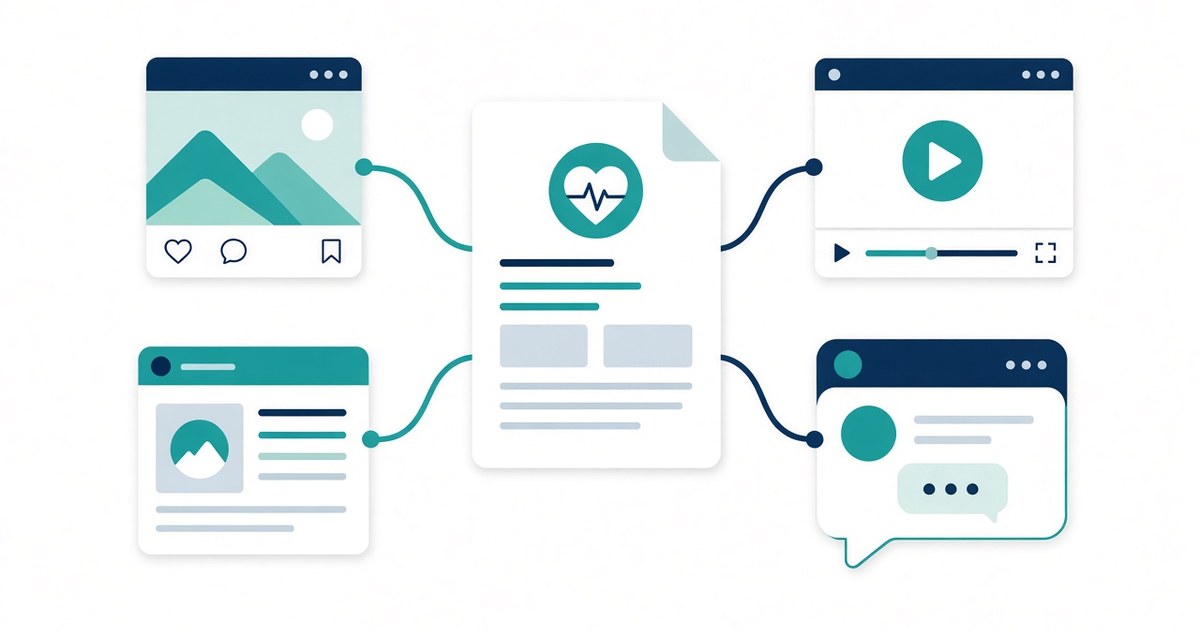
Healthcare professionals have valuable knowledge to share, but communicating that knowledge effectively across social media platforms requires more than publishing the same post everywhere.
A doctor might want to explain diabetes prevention, discuss common symptoms of hypertension, or highlight the importance of preventive health screenings. While the underlying medical information remains consistent, audiences consume content differently across Instagram, Facebook, LinkedIn, and YouTube.
A detailed medical explanation that works well in a YouTube video may feel overwhelming as an Instagram caption. Similarly, a short Instagram Reel may not provide enough context for a LinkedIn discussion targeting healthcare professionals.
This is why adapting one healthcare topic different social platforms require a deliberate content strategy.
For doctors, healthcare communications leads, and social media managers in India, the objective should be to preserve medical accuracy while changing the format, depth, presentation, and messaging according to each platform.
An effective approach to social media marketing for doctors does not require creating entirely new ideas for every channel. It requires transforming one reliable source of information into several audience-appropriate content formats.
Why Healthcare Content Needs Platform-Specific Adaptation
Healthcare communication carries responsibilities that ordinary promotional content does not.
Medical information must remain accurate, understandable, and appropriately contextualised. Oversimplifying clinical information can create misunderstandings, while presenting excessive technical detail can discourage audience engagement.
Cross-posting identical content creates another challenge. Each platform has different content formats, audience expectations, and interaction patterns.
For example:
- Instagram encourages visual storytelling, short videos, carousels, and accessible explanations.
- Facebook supports community-oriented communication, educational posts, and longer discussions.
- LinkedIn provides opportunities for professional perspectives, healthcare leadership, and institutional communication.
- YouTube accommodates detailed explanations, demonstrations, interviews, and longer educational videos.
These differences influence how audiences discover and consume healthcare information.
The solution is not to change the medical message for every platform. Instead, communications teams should retain the same central information while adjusting how they present it.
This distinction is fundamental to effective healthcare digital marketing.
Key Principles Behind Platform-Specific Healthcare Content
Before adapting a topic, healthcare communications teams should establish a few essential principles.
1. Preserve Medical Accuracy
The clinical message must remain consistent across every platform.
A doctor discussing hypertension should not present different diagnostic thresholds or treatment recommendations simply because the content appears on Instagram rather than LinkedIn.
Every adaptation should retain relevant medical context, limitations, and appropriate disclaimers.
2. Understand Platform Expectations
Each platform serves different communication purposes.
A short Instagram video might introduce a health concern, while a YouTube video explores its causes, symptoms, diagnosis, and management.
LinkedIn could examine the broader implications for preventive healthcare.
3. Match Content Depth to Audience Intent
Not every audience member wants the same level of detail.
Patients may need accessible explanations, while healthcare professionals may appreciate clinical context and professional discussion.
Content should reflect the intended audience without compromising accuracy.
4. Maintain a Consistent Professional Identity
Doctors should communicate with a recognisable professional voice.
Visual identity, terminology, tone, and medical positioning should remain consistent even when content formats change.
5. Prioritise Education Over Engagement
Likes, shares, and comments are not substitutes for meaningful healthcare communication.
Content should help audiences understand health concerns, recognise when professional advice is necessary, and make informed decisions.
How to Adapt One Healthcare Topic Across Different Social Media Platforms
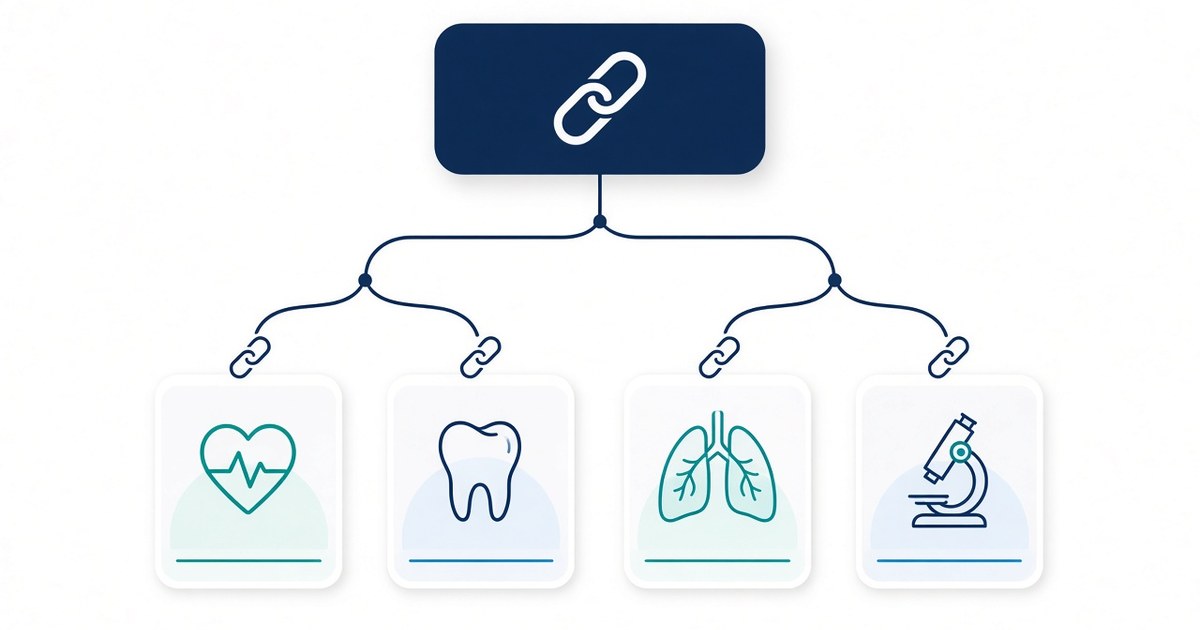
A practical way to approach content adaptation is to assign each platform a specific communication role.
| Platform | Recommended format | Communication objective |
|---|---|---|
| Reels, carousels, Stories | Awareness and accessible education | |
| Educational posts, videos, discussions | Community engagement | |
| Professional posts, articles, document posts | Expertise and professional credibility | |
| YouTube | Shorts and long-form videos | Discovery and detailed education |
These are strategic recommendations rather than guaranteed platform performance outcomes. Instagram also provides creators with personalised guidance through its Professional Dashboard’s Best Practices section, covering creation, engagement, reach, and platform guidelines.
Instagram: Make Complex Information Visually Accessible
Instagram works well for breaking a broad healthcare subject into smaller educational messages.
Consider a cardiologist discussing hypertension. Instead of publishing a lengthy medical explanation, the communications team could create:
- A Reel explaining three common misconceptions about high blood pressure.
- A carousel outlining important risk factors.
- A Story containing a simple question-and-answer format.
- A short video explaining when someone should seek medical advice.
Each format communicates a different aspect of the same subject.
Visual explanations, readable text, subtitles, and clear headlines can improve accessibility.
Facebook: Encourage Meaningful Community Discussions
Facebook can accommodate more detailed educational posts and community-oriented communication.
The same hypertension topic could become a post explaining why routine blood pressure monitoring matters.
A practice could also publish a short educational video followed by a general question about preventive health awareness.
However, administrators should moderate comments carefully. They should not encourage people to disclose medical histories or seek individual diagnoses through public discussions.
LinkedIn: Establish Professional Authority
LinkedIn offers opportunities to discuss healthcare topics from a professional and institutional perspective.
For the hypertension example, a doctor could publish an article about the importance of preventive screening, early identification of cardiovascular risk factors, and patient education.
A healthcare communications lead could also develop a document post explaining the role of preventive healthcare in reducing avoidable health complications.
The emphasis should be on evidence, professional insights, and responsible healthcare communication rather than direct patient solicitation.
LinkedIn’s own guidance recommends relevant, authentic, value-oriented professional content, including educational information and advice.
YouTube: Explore the Subject in Greater Depth
YouTube is suitable for healthcare topics that require explanation beyond a short caption or visual post.
A cardiologist could record an educational video covering:
- What hypertension means.
- Common risk factors.
- Why regular monitoring matters.
- How doctors evaluate blood pressure.
- General lifestyle considerations.
- When professional medical assessment is necessary.
A shorter YouTube Short could independently explain one important point from the longer video.
YouTube recommends making Shorts useful as standalone content rather than relying entirely on viewers watching another video for context.
A Step-by-Step Framework for Healthcare Content Adaptation
An organised workflow helps teams maintain consistency without producing repetitive content.
Step 1: Select one medically relevant topic.
Choose a subject that addresses a genuine patient information need, such as diabetes prevention, thyroid disorders, maternal health, or cardiovascular screening.
Step 2: Establish the central medical message.
Have the relevant doctor or qualified clinical reviewer verify the facts, terminology, recommendations, and limitations.
Step 3: Identify the audience for each platform.
Determine whether the content addresses prospective patients, existing patients, caregivers, healthcare professionals, or the wider community.
Step 4: Assign a different format to each platform.
Decide whether the subject works best as a Reel, carousel, educational article, professional post, or detailed video.
Step 5: Adjust the depth and presentation.
Use accessible language for general audiences. Include additional context where the platform and audience justify a deeper explanation.
Step 6: Review every adaptation.
Check medical accuracy, readability, visual accessibility, privacy, and applicable professional and advertising requirements.
Step 7: Schedule and evaluate publication.
Distribute the adapted content according to a realistic publishing calendar. Review performance before deciding what to improve or repurpose.
Practical Content Adaptation Checklist
Before publishing, social media managers can use this checklist:
- The central medical message remains consistent.
- Every medical claim has been reviewed by a qualified professional.
- Each platform has a distinct content format.
- The depth matches the intended audience.
- Headlines are relevant to the platform.
- Videos include readable subtitles.
- Graphics use accessible text and appropriate visual hierarchy.
- Captions avoid misleading medical promises.
- Patient information and identifiable images are protected.
- Promotional relationships are appropriately disclosed.
- Each post has a relevant, non-misleading next step.
Common Mistakes and Compliance Considerations
Even well-planned content strategies can become ineffective when teams prioritise publishing frequency over communication quality.
- Identical cross-posting: Publishing the same caption, graphic, and video everywhere ignores platform differences. Repurposing should involve meaningful adaptation.
- Excessive simplification: Short-form content should not remove important medical qualifications or create misleading impressions.
- Overly promotional messaging: Healthcare communication should prioritise education and professional credibility rather than exaggerated treatment claims.
- Ignoring audience interaction: Comments and questions can reveal information gaps. However, public platforms should not become substitutes for medical consultations.
- Using patient content without appropriate safeguards: Patient photographs, testimonials, treatment images, and clinical information require particular care.
In India, doctors and healthcare organisations must pay attention to applicable professional conduct requirements, advertising standards, and privacy obligations.
One important regulatory distinction deserves attention: the National Medical Commission’s August 2023 Gazette notification placed the 2023 Registered Medical Practitioner (Professional Conduct) Regulations in abeyance and restored the 2002 professional conduct regulations pending further notification.
Therefore, communications teams should not treat the 2023 social media guidance as automatically operative law. They should verify the current requirements with the relevant medical council and obtain appropriate compliance advice.
Additionally, ASCI’s influencer advertising guidelines require appropriate disclosure of material commercial relationships. Its 2025 health and financial influencer provisions also address qualifications and prominent credential disclosure when providing technical advice.
Healthcare teams should also follow applicable data protection requirements and obtain appropriate consent before using identifiable patient information or images.
Building a More Effective Healthcare Social Media Strategy
Successful healthcare communication depends on delivering the right information in the right format without compromising medical accuracy.
Adapting one healthcare topic different social platforms allow doctors and communications teams to maximise the usefulness of their existing knowledge while avoiding repetitive publishing.
A well-planned strategy combines visual education on Instagram, community-oriented communication on Facebook, professional insights on LinkedIn, and detailed explanations on YouTube.
For healthcare organisations in India, this approach can make content more accessible, consistent, and relevant to different audiences.
Ultimately, effective social media marketing for doctors is not about publishing everywhere. It is about communicating meaningfully wherever the intended audience engages.
Healthcare practices looking to develop a structured, platform-specific content strategy can explore healthcare social media marketing services to understand how professional content planning supports their broader healthcare digital marketing efforts.

 admin