 Laxmishree Banerjee
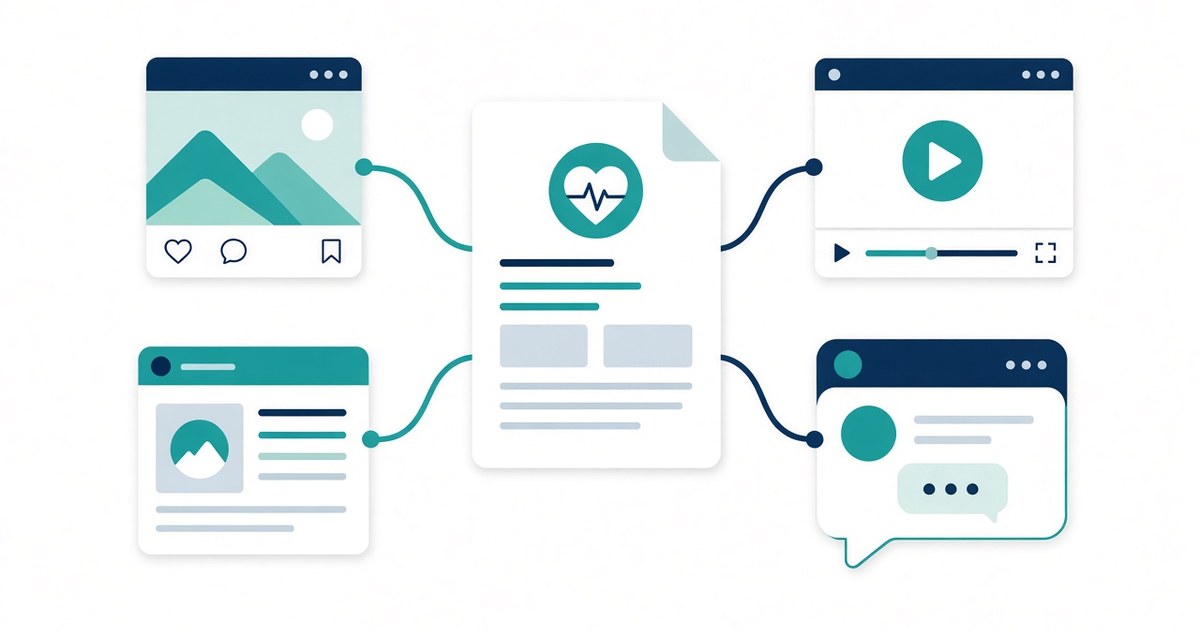
A healthcare website may offer several valuable services, yet visitors can still struggle to find the information they need. A clinic might have separate pages for dermatology, acne treatment, skin allergy consultations and cosmetic procedures. However, if these pages remain disconnected, visitors must return to the main menu or repeat their searches to explore related services.
This creates unnecessary friction in the patient journey. It can also make it harder for search engines to understand how different pages relate to one another.
Building internal links healthcare service pages helps solve this problem by creating meaningful connections between broad service categories and specific treatment or consultation pages. A well-planned linking structure supports navigation, improves content discoverability and strengthens the website’s overall information architecture.
For clinic owners, practice managers and healthcare marketing teams, internal linking should be treated as a practical website management activity rather than an occasional SEO task.
Why Internal Linking Matters for Healthcare Websites?
Healthcare visitors rarely follow a perfectly predictable journey. Someone searching for a cardiologist may later explore heart health assessments, ECG testing or preventive consultations. Similarly, a person researching dental services might need information about implants, root canal treatment or orthodontics.
If the website does not connect these related pages, visitors may miss useful information.
Internal links help users move between relevant sections without repeatedly navigating through the main menu. They also help search engines discover pages and understand their relationship within the website.
Google recommends using descriptive anchor text that gives users and search engines meaningful information about the linked destination. Its SEO documentation also explains that links help Google discover pages across a website.
This makes healthcare SEO more than a matter of optimising individual service pages. The connections between those pages also deserve attention.
For clinics operating in Kolkata, West Bengal or other Indian markets, a logical structure can be particularly useful when a website covers multiple specialties, treatment categories or practice locations.
Key Principles Behind Building Internal Links Between Healthcare Service Pages
An effective internal linking strategy follows a few practical principles.
1. Connect Pages With Genuine Topical Relationships
A link should help visitors find information that naturally follows from the page they are reading.
For example, a dermatology overview can link to acne treatment, psoriasis management and skin allergy consultations. However, linking every dermatology page to unrelated services simply to increase internal link volume creates confusion.
Relevance should determine whether a link belongs on a page.
2. Build a Clear Parent-and-Child Structure
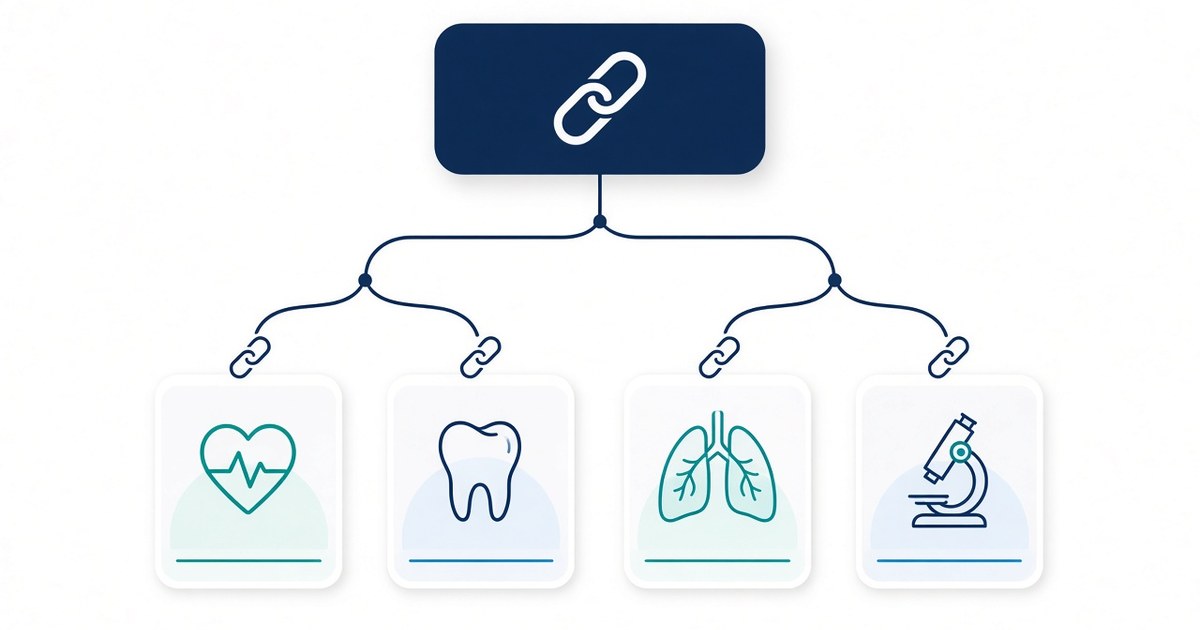
Healthcare websites benefit from a hierarchy that moves from broad information to specific services.
A typical structure might look like this:
– Main specialty: Cardiology
- Heart health consultation
- ECG testing
- Echocardiography
- Preventive cardiac assessment
The main cardiology page introduces the specialty and directs visitors towards relevant services. Individual service pages provide more detailed information and link back to the parent page where appropriate.
3. Use Descriptive Anchor Text
Anchor text should explain what visitors can expect after clicking.
Instead of using generic phrases such as “click here” or “read more”, use descriptive wording such as “learn about echocardiography services” or “explore our preventive cardiac assessments”.
Avoid repeating identical keyword-heavy anchors everywhere. Natural language and context should guide the wording.
4. Prioritise User Experience
Internal links should appear where they are useful. A relevant link within an explanatory paragraph may be more helpful than a large collection of unrelated links placed at the bottom of every page.
The objective is to make the next step easier for visitors.
A Step-by-Step Method for Creating a Healthcare Internal Linking Map
A structured linking map helps marketing teams identify which pages should connect and why.
Step 1: Create a Complete Service Page Inventory
Start by listing all published service pages. Include specialty pages, treatment pages, diagnostic services, consultation pages and location-specific service pages.
Record the following information:
- Page title and URL
- Main specialty or service category
- Primary search intent
- Parent category, if applicable
- Existing internal links
- Important related pages
This inventory provides a clear view of the website’s current structure.
Step 2: Identify Parent and Supporting Pages
Group pages according to their clinical and informational relationships.
For example, a multi-specialty clinic might organise its cardiology content around a main specialty page, followed by diagnostic and consultation pages.
Avoid creating artificial relationships simply because two pages belong to the same clinic.
Step 3: Decide Which Pages Should Link to Each Other
Use the following practical framework:
| Source page | Recommended destination | Linking purpose |
|---|---|---|
| Cardiology overview | ECG testing | Introduce a relevant diagnostic service |
| Cardiology overview | Heart health consultation | Guide visitors towards consultation information |
| ECG testing | Cardiology overview | Provide broader specialty context |
| Heart health consultation | Preventive cardiac assessment | Explain a related service |
| Preventive cardiac assessment | Heart health consultation | Help visitors explore consultation details |
This structure creates a natural journey from broad specialty information to specific service details.
Step 4: Add Contextual Links to Relevant Sections
Place links within paragraphs where the destination adds value.
For example, a cardiology page discussing diagnostic procedures can introduce its ECG testing page. A separate section about preventive care can link to the relevant assessment page.
Keep the surrounding explanation meaningful. Visitors should understand why the link is useful before clicking it.
Step 5: Review Navigation and Breadcrumbs
Contextual links should work alongside the website’s navigation.
Breadcrumbs can help visitors understand where a page sits within the overall hierarchy. A structure such as Home → Specialties → Cardiology → ECG Testing makes the relationship easier to interpret.
Ensure that important pages remain accessible through normal navigation and are not dependent on a single contextual link.
Illustrative Example: A Linking Map for a Multi-Specialty Clinic
Consider a hypothetical clinic in Kolkata offering dermatology, cardiology and orthopaedic services.
Its dermatology section contains:
- Dermatology overview
- Acne treatment
- Skin allergy consultation
- Psoriasis management
The overview page introduces the specialty and links to all three supporting service pages. Each supporting page links back to the dermatology overview and, where relevant, another related service.
For instance, the acne treatment page might link to the skin allergy consultation page only when the surrounding information genuinely helps visitors understand related skin concerns.
The resulting structure looks like this:
Dermatology Overview
Parent specialty page
Relevant internal links
Acne Treatment
Skin Allergy
Psoriasis Management
Supporting pages link back to the overview and to other genuinely related services where appropriate.
This example demonstrates how building internal links healthcare service pages can make a clinic’s information easier to explore without creating unnecessary navigation paths.
Common Internal Linking Mistakes and Compliance Considerations
A few mistakes can reduce the usefulness of an otherwise well-organised linking strategy.
- Excessive linking: Adding multiple links to every paragraph can distract visitors and weaken the page’s clarity.
- Irrelevant destinations: Linking unrelated specialties creates poor navigation and confusing topical relationships.
- Generic anchor text: Repeated phrases such as “know more” provide little context.
- Orphan pages: Important service pages with no meaningful internal links can be difficult for visitors and search engines to discover.
- Broken links: Removed or renamed pages can leave visitors facing errors.
- Over-optimised anchors: Repeating exact-match keywords unnaturally can make content difficult to read.
Healthcare websites also require additional care when linking content.
Internal links must not imply that a treatment guarantees a particular outcome. Clinical claims should be reviewed by appropriately qualified professionals. Marketing teams should avoid placing identifiable patient information, medical records or private consultation details within linked URLs, anchor text or tracking parameters.
For Indian healthcare organisations, website content and patient information practices should also be reviewed against applicable professional standards and data-protection requirements.
How to Measure Progress and Choose the Next Action
Internal linking improvements should be evaluated through both usability and SEO indicators.
Useful measurements include:
- Internal link coverage: Identify important service pages that receive few or no relevant internal links.
- Page discovery: Review whether important URLs are accessible to search engines and appear in the XML sitemap where appropriate.
- Engagement: Examine relevant navigation paths, engaged sessions and interactions with service-page links.
- Organic visibility: Monitor impressions, clicks and indexing status through Google Search Console.
- Technical health: Check for broken internal links, redirect chains and incorrect destination URLs.
Do not assume that adding more links will automatically improve rankings or patient enquiries. Search performance depends on several factors, including content quality, technical accessibility, relevance and competition.
A sensible next step is to prioritise high-value service pages, correct broken links and improve connections between closely related pages. Review the linking map periodically as services change or new pages are published.
Final Thoughts
A well-planned internal linking structure helps healthcare visitors move from broad specialty information to relevant service details without unnecessary navigation. It also gives search engines clearer pathways for discovering and understanding website content.
For clinic owners and marketing teams, the most effective approach is to prioritise relevance, descriptive anchor text, logical page hierarchy and regular technical reviews.
As part of a wider healthcare digital marketing strategy, internal linking supports a more organised and accessible website. Clinics looking to strengthen this foundation can explore Doctors Branding Agency’s healthcare SEO services for further details.
Editorial evidence note: Google’s guidance supports descriptive anchor text and crawlable links as important elements of website navigation and discovery. These principles inform the framework above; the illustrative clinic example is hypothetical, not a client case study.


 admin